
How to season and clean cast iron: a pan for generations.
A cast-iron skillet stores heat and gives it back evenly, which is why it was the main pan at the hearth for so long. It can be re-seasoned and repaired, so with a few simple habits it outlasts almost anything else in the kitchen.
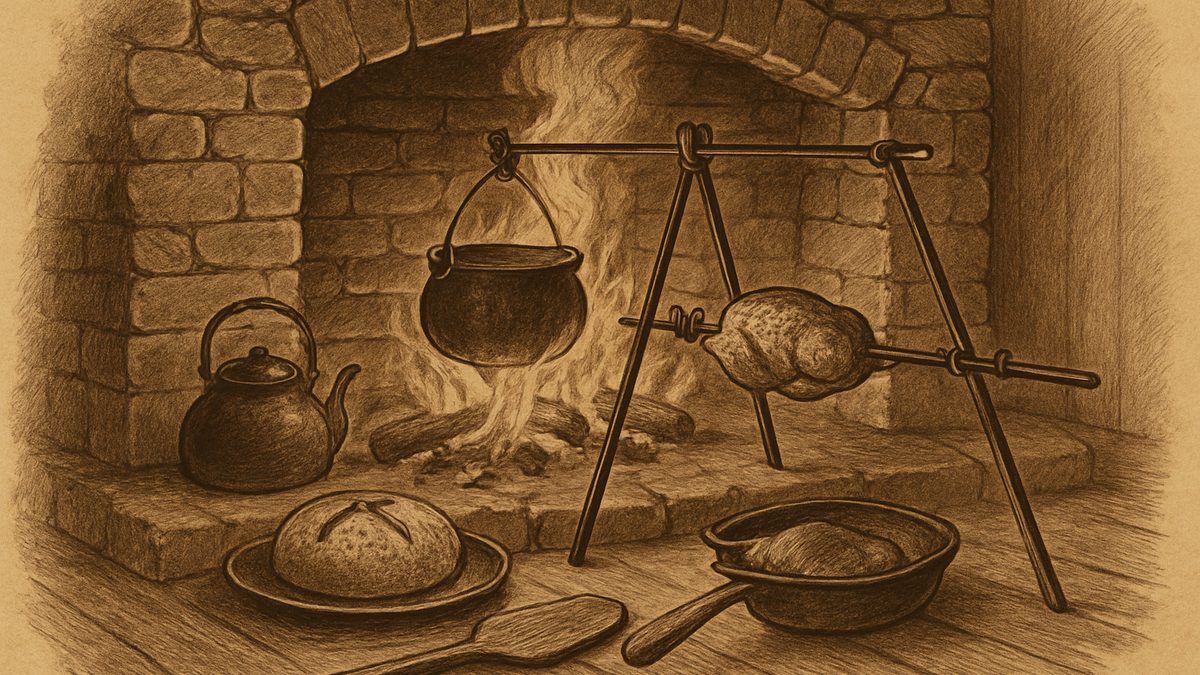
To season: after cleaning, while the pan is warm and dry, rub a thin coat of high-smoke-point oil over the inside and heat it to bond the oil. Build it up in thin layers. To clean: while it's still warm, scrub with a stiff brush or coarse salt, rinse briefly with hot water if needed, dry it thoroughly, and wipe on a light coat of oil. Don't soak it, and don't leave acidic food in it for long.
What seasoning is
Seasoning is a thin, polymerized layer of oil baked onto the iron. It gives the pan a naturally nonstick surface and protects the metal from rust. Every time you oil a warm pan and heat it, you add to it. Every long soak or long acidic simmer wears it down.
Build the first seasoning
- Clean the pan and dry it completely.
- Oil it while it's warm. Rub a thin coat of neutral, high-smoke-point oil over the cooking surface.
- Heat it to bond the oil. Heat the oiled pan briefly so the oil bonds to the iron.
- Repeat in thin layers. Several thin coats beat one thick one.
Everyday cleaning
- Clean it while it's warm. Scrub with a stiff brush, a chainmail scrubber, or a handful of coarse salt.
- Rinse briefly with hot water if you need to. Avoid long soaks.
- Dry it thoroughly. Water left on the iron is what starts rust.
- Wipe on a light coat of oil before you put it away.
Fixing rust and sticky spots
For minor rust, scrub the spot with steel wool or a wire brush, dry the pan, then re-season: apply oil and heat until smoke begins, repeating as needed. If food sticks badly, the fix is the same: scrub, dry, and rebuild the seasoning in thin oil layers until it's restored.
Cracks, major warping, or a broken handle are another matter. Take those to a professional metalworker or cookware restorer, and don't attempt crude welds at home.
What wears it down
- Soaking. It speeds up pitting and strips the seasoning.
- Long acidic cooking. Acidic food strips seasoning over a long simmer. For a long tomato stew, make sure the seasoning is strong, or use an enameled pot.
- Thermal shock. Never plunge a red-hot skillet into cold water. Sudden cooling can crack older pieces.
Cooking so the seasoning lasts
- Preheat slowly. Start on low and work up. Cast iron heats slowly but holds heat, so avoid sudden jumps on cold metal.
- Add fat. A thin layer of oil, lard, or butter. Flick on a drop of water: if it skitters and sizzles, you're ready.
- Don't crowd the pan. Food in a single layer browns; a crowded pan steams.
- Manage the heat. High heat sears, medium fries, low suits eggs and sauces. Over a fire, move the pan nearer or farther from the coals. Use a lid to finish thicker cuts.
The handle gets extremely hot, so always use a cloth, mitt, or handle holder.
Other options
Enameled cast iron needs no seasoning and is easier to clean, which makes it the better pick for acidic dishes. Carbon steel is lighter and needs seasoning too. The care principles are much the same.
A starter kit
- A medium cast-iron skillet (8 to 10 inch) and a larger 10 to 12 inch skillet or griddle
- A flat metal spatula and a wooden or silicone turner
- A handle holder or high-heat oven mitts
- A chainmail scrubber, or coarse salt and a stiff brush
- A bottle of neutral, high-smoke-point oil
- Optional: an enameled Dutch oven for acidic dishes
Start with one pan and one recipe, eggs or pancakes, until the timing feels natural. Every tool you rely on needs the same clean, dry, oil routine: see how to sharpen knives and tools by hand.
What you need to season and clean cast iron
- Chainmail scrubberScrubs a warm pan clean without a long soak.See options on Amazon →
- High-smoke-point oilA thin coat on warm, dry iron builds the seasoning and keeps it.See options on Amazon →
- Cast iron handle holderThe handle gets extremely hot, so always use a cloth, mitt, or holder.See options on Amazon →
- Stiff scrub brushWith a handful of coarse salt, the other way to clean it while it’s warm.See options on Amazon →
- Steel woolFor minor rust: scrub the spot, dry the pan, then re-season it.See options on Amazon →
- Enameled Dutch ovenOptional, and the better pick for a long acidic stew.See options on Amazon →
These are Amazon links. If you buy through them I earn a small commission, at no extra cost to you.
Build your toolkit one shelf at a time
Get the free Self-Sufficient Home Starter Toolkit checklist: what to keep on hand for laundry, cooking, light, food, water, the workshop, and the garden.
One free PDF, delivered instantly. No spam, unsubscribe anytime.
The Lost Tools Handbook
Old-world skills for simple, self-sufficient living: laundry, cast iron, heat, light, food storage, water, woodworking, tool repair, and the garden.
Read it on Amazon →Can you cook tomato sauce in cast iron?
Acidic foods strip seasoning over long cooking. For a short cook on a well-seasoned pan it's fine; for a long tomato stew, make sure the seasoning is strong or use an enameled pot.
How do you get rust off cast iron?
Scrub the rust with steel wool or a wire brush, dry the pan thoroughly, then re-season it: rub on a thin coat of oil and heat it until smoke begins, repeating as needed.