
How to use a scythe: fit it, swing it, keep it sharp.
A scythe cuts grass, hay, and cover crops quickly with a rhythmic, low-effort motion, no fuel and almost no parts. The secret is less about strength than setup: a scythe fitted to your body, a smooth swing, and an edge you keep up.
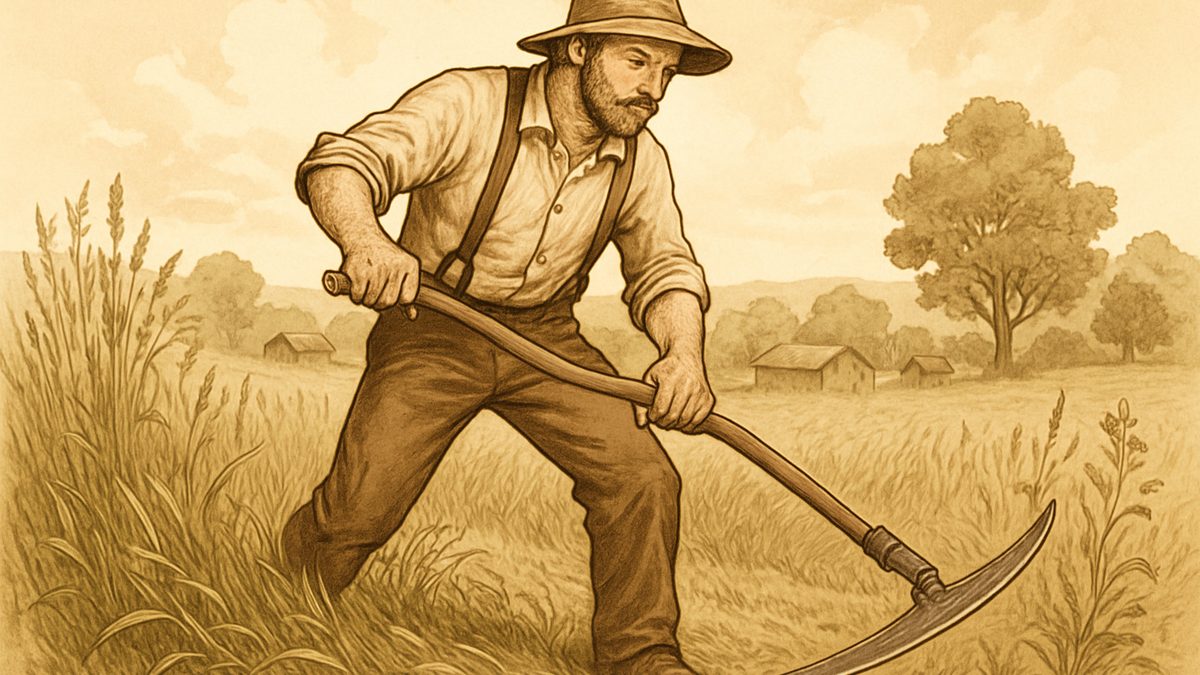
Fit the snath (the handle) so the top grip sits at or just below chest height and the lower grip at hip height, with a blade roughly the length of your leg. Stand with feet shoulder-width and knees slightly bent, and sweep the blade in a smooth arc from right to left (reversed for left-handers), letting it skim the ground. Walk forward with the swing and overlap each swath. Touch up the edge with a whetstone as you work, and peen and file it every few weeks to months.
What a scythe is
A scythe is a long, slightly curved blade mounted on a wooden or metal handle called a snath, with two adjustable grips. Shorter blades suit orchards and edges; longer blades suit open fields and hay. Scythes replaced sickles for large-scale mowing because they're faster and less tiring, and they stayed in use wherever fuel or machinery was scarce.
Fit it to your body
Proper fit prevents fatigue and makes every stroke more efficient.
- Pick the blade length. Roughly equal to your leg length for mowing, shorter for tight spaces.
- Set the grips. Standing upright, the top grip should sit at or just below chest level and the lower grip at hip height, both allowing a relaxed bend in the elbows.
- Tighten everything. Tighten the bolts or wedges that hold the blade. A loose blade changes angle while you cut.
- Check the angle. In your mowing stance, the curved belly of the blade should sit parallel to the ground. If it points up or down, loosen the mount and realign it.
- Test the balance with a few dry swings, well away from people, and recheck after a few hours of use, since wooden snaths settle and hardware loosens.
How to mow
- Take a neutral stance: feet shoulder-width, knees slightly bent, spine straight, top grip near your chest and lower grip at your hip. Face the edge of the area you'll cut.
- Swing in a smooth arc. Right-handed, lead with your right foot and sweep from right to left. Shift your weight onto the lead foot as you extend your arms forward.
- Let the blade do the work. It should slice at ground level with a shallow cutting angle. Recover with a controlled return swing, without abrupt lifts.
- Walk forward at a steady pace, keeping your feet in line with the blade's path, and overlap each swath slightly so you don't miss stalks.
Pause to clear stones and tangles, and rest often in hot weather or heavy growth. A steady rhythm builds with practice and is what keeps the work easy.
Sharpening and peening
A scythe edge gets two tiers of care.
- Daily touch-ups: a fine whetstone removes burrs and keeps the edge keen while you work.
- Peening: every few weeks to months, depending on use, hammer the edge with a peening hammer on a small anvil to thin and reshape the metal, then finish with a file to re-establish the bevel.
The same edge habits work on every blade you own: see how to sharpen knives and tools by hand.
Safety
- Wear gloves for handling and maintenance, eye protection while peening and mowing, and sturdy boots to protect your feet.
- Avoid loose clothing that could catch on the snath.
- Keep bystanders well clear, and never swing in confined spaces or while distracted.
- Store the blade covered and dry, and inspect the fastenings before each session.
Scythe or sickle?
A sickle is a short-handled, inward-curved blade for close cutting where precision matters: narrow beds, herbs, edges, and small grain plots. Hold a small handful of stalks in your off hand and slice in line with the curve. For wider sweeps, a scythe saves time and strain. Many gardeners use both, plus a hand rake to gather the cut stems.
A starter kit
- Scythe and snath fitted to your height
- Whetstone
- Peening hammer and a small anvil or flat steel surface
- Flat and round files
- Gloves, eye protection, and sturdy boots
- Spare bolts or wedges and a blade cover
Modern trimmers and reel mowers can be faster in some settings, but they need power, batteries, or fuel. A scythe needs a file and a hammer. For the rest of the garden kit, see the free starter toolkit checklist on the Lost Tools page.
What you need to mow and keep the edge
- Scythe whetstoneA fine whetstone removes burrs and keeps the edge keen while you work.See options on Amazon →
- Peening hammer and anvilEvery few weeks to months, peen the edge to thin and reshape the metal.See options on Amazon →
- Work glovesWear them for handling and maintenance.See options on Amazon →
- Safety glassesEye protection while peening and while mowing.See options on Amazon →
- Flat and round filesFinish after peening to re-establish the bevel.See options on Amazon →
- Scythe and snathFit the grips to your height, with a blade about the length of your leg.See options on Amazon →
These are Amazon links. If you buy through them I earn a small commission, at no extra cost to you.
Build your toolkit one shelf at a time
Get the free Self-Sufficient Home Starter Toolkit checklist: what to keep on hand for laundry, cooking, light, food, water, the workshop, and the garden.
One free PDF, delivered instantly. No spam, unsubscribe anytime.
The Lost Tools Handbook
Old-world skills for simple, self-sufficient living: laundry, cast iron, heat, light, food storage, water, woodworking, tool repair, and the garden.
Read it on Amazon →How often do you peen a scythe?
Every few weeks to months, depending on how much you mow. Between peenings, touch up the edge with a fine whetstone as you work to remove burrs and keep it keen.
What is the difference between a scythe and a sickle?
A scythe has a long blade on a two-grip handle for mowing wide areas. A sickle is a short-handled, inward-curved blade for close, precise cutting in narrow beds, herbs, and small plots.