
How to sharpen knives and tools by hand: stone, burr, strop.
A sharp tool is a safer tool: it needs less pressure, tracks where you aim it, and is less likely to slip. You don't need power to keep one that way. A file, a couple of stones, and a strip of leather handle knives, axes, chisels, and garden tools.
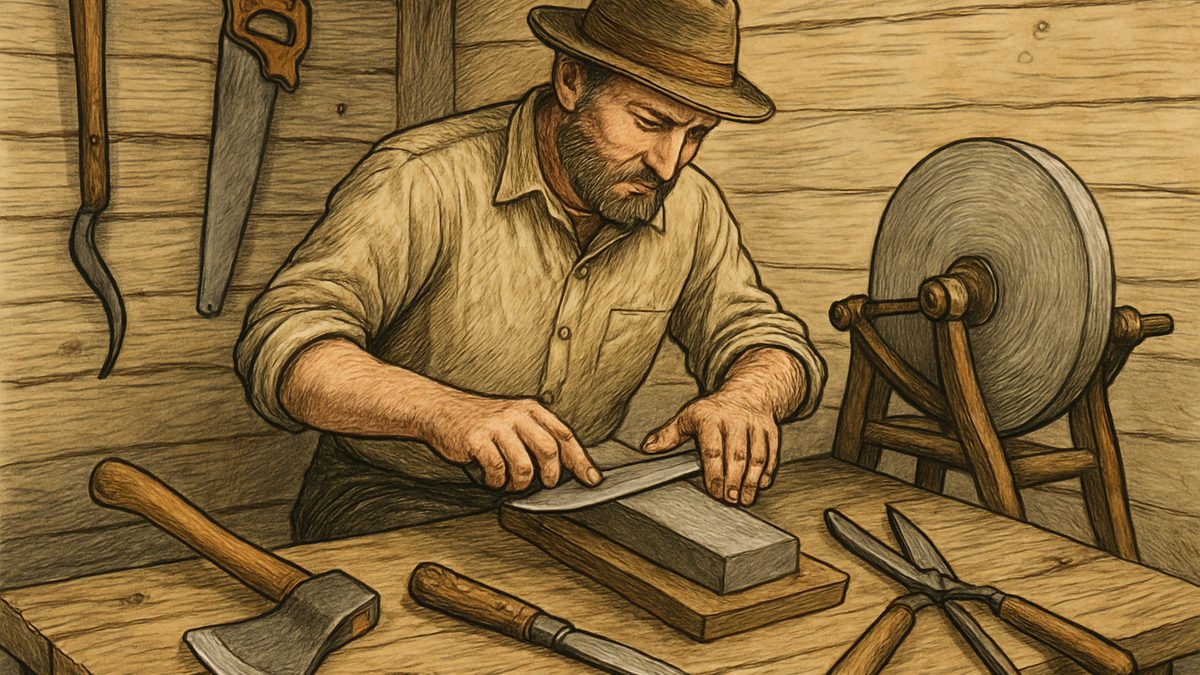
Secure the tool and check the edge. Hold the blade at a steady angle (about 15 to 25° for knives, 25 to 30° for chisels) and push it across a coarse stone, edge first, in smooth strokes from heel to tip, alternating sides. Move to finer stones until a burr forms along the edge, remove it with light passes on the other side, then strop on leather with the edge trailing. Wipe the blade dry and oil it.
Read the edge first
Hold the blade to the light and look for chips, a rolled edge, or uneven bevels. Use a fingernail or a magnifier to find a burr, the thin ridge that tells you you've reached the cutting edge. Then decide what it needs:
- Just dull: strop it or hone it lightly.
- Rolled, nicked, or out of shape: re-profile it with a file or a coarse stone.
- Deep chips: these may need professional work.
Never test sharpness on skin. Use paper or wood shavings.
The whetstone routine
- Prepare the stone. Soak a waterstone for the recommended time, or put a light film of oil on an oilstone if it calls for it.
- Secure it on a non-slip pad.
- Set your angle. About 15 to 25 degrees for knives, 25 to 30 degrees for chisels. Hold that angle steady.
- Stroke edge-first. Push the blade across the stone in smooth strokes from heel to tip, alternating sides to keep the bevel centered. Five to ten strokes per side is a good start.
- Go finer. Move to a finer grit and repeat until a burr forms along the edge.
- Strop it. Finish on leather with polishing compound.
- Clean up. Clean and dry the stone and the blade, and oil or lightly wax a carbon-steel blade.
Re-profiling with a file
For an axe, a hoe, or any edge that's badly worn, start with a file. Secure the tool in a vise or clamp with the edge clear. Hold a coarse file at the bevel angle you want and make even passes, keeping the strokes away from your body. Then move to a coarse stone, with water or oil as appropriate, stroking along the bevel, and work through finer stones until a burr forms. Flip the blade, remove the burr with light passes, and finish on a fine stone.
Stropping
A leather strop charged with compound polishes the bevel and removes the burr without taking off much metal, which leaves a keener edge that lasts longer. Lay the blade flat on the leather with the edge trailing, so the spine leads, and pull it along with light pressure, alternating sides until the burr is gone. Keep your fingers behind the spine.
Saws and garden tools
For saws and garden tools, the best non-powered choice is a round or triangular file matched to the tooth size. Diamond stones cut quickly and stay flat, ceramic rods are good for quick touch-ups, and a hand-cranked wheel works if you use slow, steady pressure and keep the metal cool.
Keep the stones flat
Stones dish with use. Flatten one by rubbing a coarse flattening stone or a diamond plate across it in a figure-eight until the surface is even. Clean off slurry and filings, keep stones from glazing, and store them dry and out of frost. Keep leather strops dry and away from pests.
Maintain rather than rebuild
Small, regular care saves metal and heavy regrinds.
- After each use: wipe blades dry, apply a light coat of oil, and strop or hone as needed.
- Every few months: check that the bevel is consistent, remove light rust with a fine abrasive, and tighten or replace loose handles.
- Wooden handles: rub in boiled linseed oil or beeswax paste sparingly, then wipe off the excess.
- Storage: hang tools or rack them off damp floors. Avoid sealed plastic bags, which trap humidity; canvas or wooden racks breathe.
Safety
- Secure the tool before you sharpen it, and work slowly.
- Move the edge away from your body and keep your fingers clear.
- Wear eye protection for any filing or grinding.
- Stop if the edge heats up from friction, and never use a powered wheel without guards.
Need the scythe routine with peening? See how to use a scythe. Same clean, dry, oil habits keep cookware going too: how to season and clean cast iron.
What you need to sharpen by hand
- Combination whetstoneStart on a coarse stone and work through finer stones until a burr forms.See options on Amazon →
- Leather strop and compoundPolishes the bevel and removes the burr without taking off much metal.See options on Amazon →
- Coarse flat fileRe-profiles an axe, a hoe, or any edge that’s badly worn.See options on Amazon →
- Safety glassesWear eye protection for any filing or grinding.See options on Amazon →
- Diamond flattening plateStones dish with use. Rub them flat in a figure-eight.See options on Amazon →
- Light tool oilWipe blades dry and give them a light coat of oil after each use.See options on Amazon →
These are Amazon links. If you buy through them I earn a small commission, at no extra cost to you.
Build your toolkit one shelf at a time
Get the free Self-Sufficient Home Starter Toolkit checklist: what to keep on hand for laundry, cooking, light, food, water, the workshop, and the garden.
One free PDF, delivered instantly. No spam, unsubscribe anytime.
The Lost Tools Handbook
Old-world skills for simple, self-sufficient living: laundry, cast iron, heat, light, food storage, water, woodworking, tool repair, and the garden.
Read it on Amazon →What angle should I sharpen a knife at?
About 15 to 25 degrees for knives and 25 to 30 degrees for chisels. The key is holding the same angle steady through every stroke.
How do I know when to stop sharpening on a stone?
When a burr, a thin ridge of metal, forms along the edge. Then remove the burr with light passes on the other side and strop the blade on leather to finish.