
Turntable humming? Start with the ground wire.
A steady low buzz that's there even at low volume is usually a grounding or shielding problem, not the cartridge. A few simple swaps tell you where it's coming from.
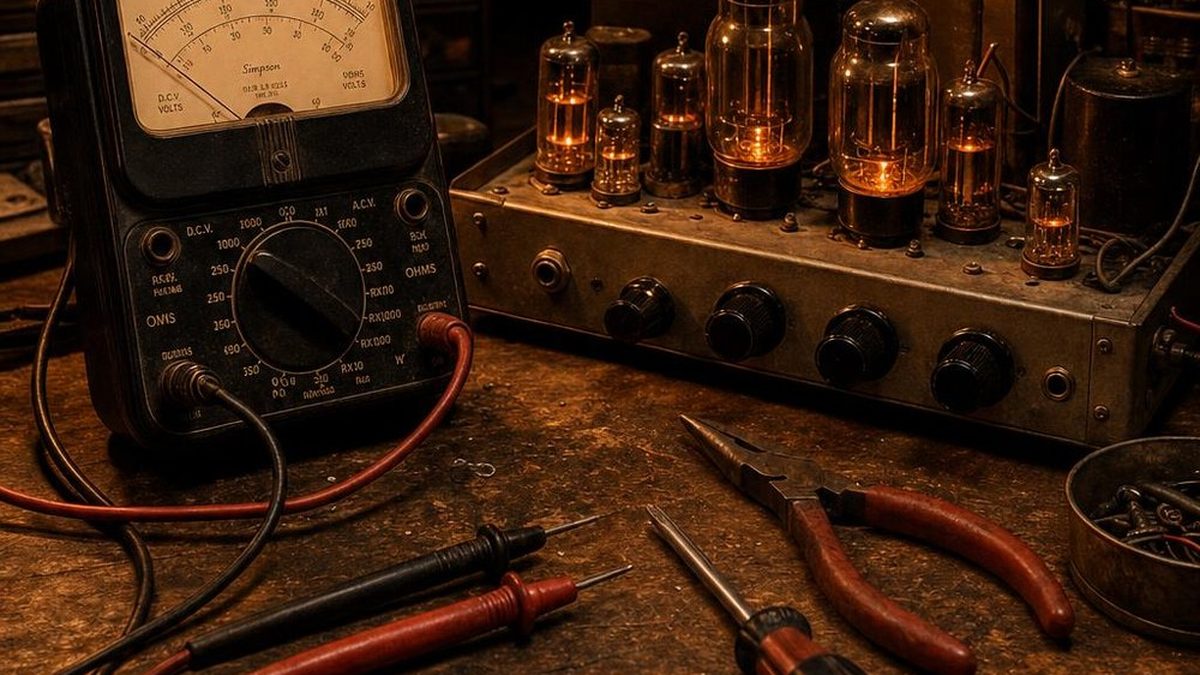
Run the turntable's ground wire to the amplifier's ground terminal as the only chassis-to-chassis connection, using a short, thick wire and a clean, tight terminal. If hum stops when you disconnect the ground wire, you have a ground loop: find and remove the extra ground path. Steady thumping that follows the platter is mechanical rumble, not hum.
Hum or rumble? Find the source
Four quick answers and you’ll know what’s making the noise and what to do, in order.
Hum is there even at low volume. Rumble follows the platter’s rotation.
Tap any that happened. Leave them all off if you haven’t tried them yet.
Hum, or rumble?
Hum is a steady, low buzz at mains frequency (50 or 60 Hz) that's there even at low volume. It usually means a grounding or shield problem. Rumble is low-frequency noise that follows the platter's rotation, and it's mechanical: a worn bearing, a loose mat, or a poorly isolated motor.
A quick way to tell: turn the amplifier down or mute it. If you still feel thumps or vibration when the platter spins, it's mechanical. Crackles and dropouts are different again, and usually mean worn RCA plugs or loose solder joints.
Find the source, one change at a time
- Disconnect the turntable's ground wire from the amp. If the hum stops, you've found a grounding mismatch or ground loop.
- Swap in a known-good pair of RCA cables and try a different phono input. If that fixes it, the fault was the cable or connector.
- Touch the cartridge body gently with the volume low. Hum that changes with your hand points to grounding or shielding.
- Try another outlet, move the amp further from the turntable, and turn off other connected equipment one piece at a time to find a loop.
Don't assume the amplifier is the problem. Isolate the turntable and cables first; replacing electronics is expensive and often unnecessary.
Connect the ground properly
- One ground path. Run the turntable's ground lead, usually a stranded wire with a ring terminal, straight to the amplifier's ground lug, and make that the only intentional chassis-to-chassis connection. Several separate ground paths are the most common cause of hum.
- Short and thick. Use a short, heavy wire (18 to 16 AWG) with a clean ring terminal. Tighten the screw snugly without crushing the terminal.
- Clean metal. Where the ground lug meets the chassis, remove paint and corrosion until you see bright metal, and use a star washer for a solid bite.
- Check it. With the deck unplugged, a multimeter should read near zero ohms between the RCA sleeve and the chassis ground, and there should be no continuity between either RCA center pin and the chassis.
A ground-lift adapter on the amplifier can confirm a ground loop, but never use one as a permanent fix: it defeats the safety earth.
Shielding and cables
The cable shield should connect to the chassis at the turntable end only; connecting it at both ends can create a loop that picks up hum. Route phono cables away from transformers and mains wiring, keep runs short, and replace any shielded cable that's visibly worn.
Fixing mechanical rumble
If the noise is rumble, decouple the motor. Fit soft isolation pads or a thin sorbothane washer under the motor mounts, in the same places as the originals so belt alignment doesn't change. Let sorbothane settle for a day, then recheck belt tension. Pads that are too soft let the motor rock and upset the speed, so go firmer if rumble gets worse. A noisy or sloppy platter bearing needs cleaning and fresh lubricant.
Always unplug the turntable before working inside it. Leave any work on mains-powered parts to a qualified technician.
What you need to stop the hum
- Turntable ground wireA short, heavy lead (18 to 16 AWG) with a ring terminal, run straight to the amp's ground lug.See options on Amazon →
- Shielded RCA cablesA known-good pair to swap in, and to replace any shielded cable that's visibly worn.See options on Amazon →
- Digital multimeterWith the deck unplugged, check near zero ohms from RCA sleeve to chassis ground.See options on Amazon →
- Star lock washersUnder the ground lug, on bright metal, for a solid bite.See options on Amazon →
- Ring terminalsA clean ring terminal for the ground lead, tightened snugly without crushing it.See options on Amazon →
- Sorbothane washersFor rumble: decouple the motor at its mounts. Go firmer if rumble gets worse.See options on Amazon →
These are Amazon links. If you buy through them I earn a small commission, at no extra cost to you.
Keep the checklist by the deck
Get the free Turntable Troubleshooting Checklist: seven quick checks to find the fault before you spend a dime on parts or hand it to a shop.
One free PDF, delivered instantly. No spam, unsubscribe anytime.

DIY Vintage Turntable Repair
The full guide: belts, idlers, bearings, speed, cartridge alignment, tonearm setup, auto-return mechanisms, wiring and hum, chapter by chapter.
Read it on Amazon →Does a turntable need a ground wire?
If it has one, connect it to the amplifier's ground terminal as the single ground path between them. A loose or missing ground is a common cause of hum.
Why does my turntable hum when I touch it?
Hum that changes when you touch the cartridge or tonearm usually points to a grounding or shielding problem. Check the ground wire connection and the RCA cables first.