
Choosing a forge: coal, propane, or electric.
The forge sets the rhythm of every session. Pick it by the work you'll actually do, the space and air you have, and how much fire tending you enjoy, not by the biggest job you can imagine.
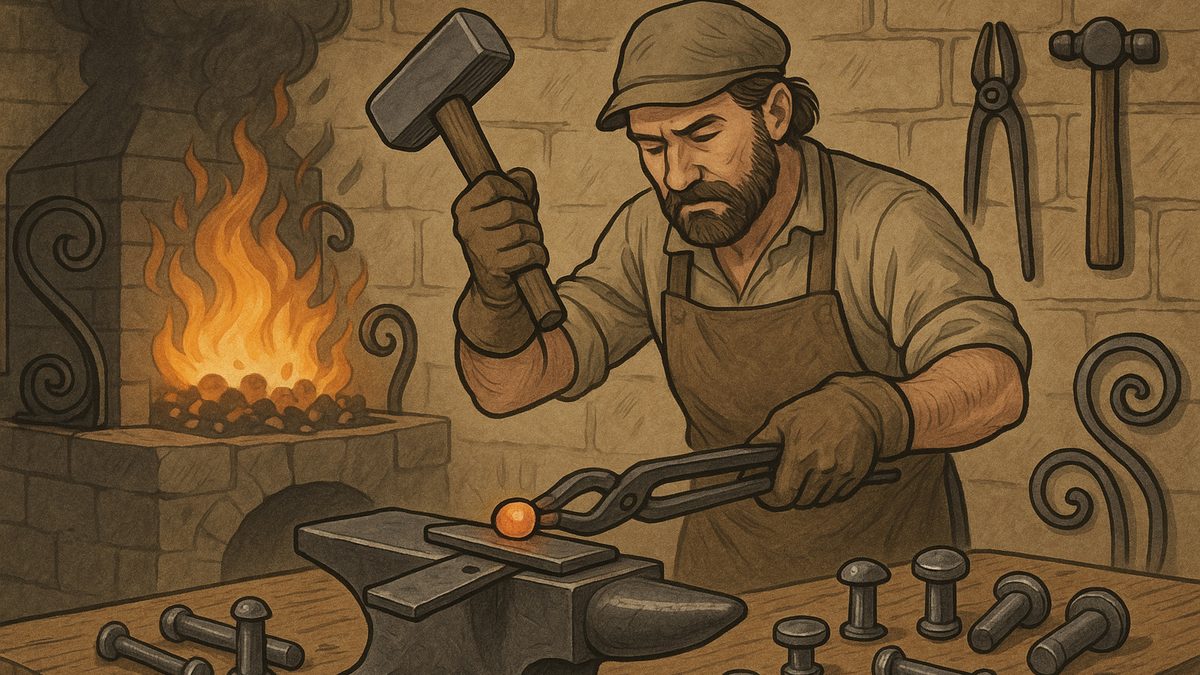
For most small shops and beginners, a propane forge: quick to start, clean, compact, and easy to control. Choose coal or coke for traditional fire control, forge welding, and high, sustained heat on thick stock, if you have a chimney or outdoor space. Choose electric for clean, precise heat, especially heat treating, if your budget and electrical service allow.
Which forge should I get?
Five quick answers and you’ll know which forge fits your work and space, what size to look for, and how to vent it.
This only matters if you want electric heat for hardening and tempering.
Measure the stock you work most often, not the biggest job you can imagine.
The three options side by side
| Propane | Coal or coke | Electric | |
|---|---|---|---|
| Start-up | Fast | Slower; you build the fire | Fast |
| Mess | Little scale and soot | Smoke, soot, ash, clinker | Almost none |
| Heat | Even, repeatable | Highest, and you can make local hot spots | Precise, controlled |
| Best for | Learning, most small projects | Heavy stock, long heats, forge welding | Heat treating and tempering |
| Watch for | Carbon monoxide; vent it | Smoke; needs a chimney or outdoors | Heavy electrical service, cost |
Propane: the practical first forge
Gas forges start quickly, run clean, and fit in a garage. The burners concentrate heat in a small chamber, so heat-up is fast and results are consistent. They're not ideal for every traditional technique, but for most small-shop projects and for learning hammer control, a propane forge is a low-fuss choice.
The forge body matters as much as the burner. Ceramic fiber with a hard refractory coat warms up fast and holds up; castable refractory is heavier and holds heat longer. One tube burner heats a small chamber; several spread the heat for longer bars.
Setup. Use a regulator and hose rated for the gas, a shutoff near the forge, and gas-rated thread sealant. Check every connection with soapy water before each session. Keep the cylinder upright and secured outdoors when you're not using it.
Tuning. More air gives a hotter, leaner flame; less air gives a richer, softer one. A short, well-defined inner cone and a blue flame are what you want. Long yellow tips or soot mean incomplete combustion. A quiet, steady whoosh is good; popping or rumbling means the mix or pressure is off. For forge welding, a slightly rich flame helps protect the steel from scale.
Coal and coke: traditional and powerful
A coal forge gives you a flexible fire: you can build a pocket of intense heat, forge weld, and shape large or awkward stock. Expect more smoke, soot, and ember dust, so plan on a chimney or outdoor placement and a cleanup routine.
Raw bituminous coal is affordable and lights readily but smokes on startup. Coke is coal baked to remove volatiles: denser, hotter, steadier, and cleaner. Many smiths start the fire with bituminous and work with coke.
Building the fire. Light kindling or coal fines in the center, add small coal until you have a glowing core, then pile larger lumps around and over it. Keep fresh coal near the tuyere for quick feeding. Tamp gently; packing it too tight chokes the air. A hand-crank blower or bellows teaches you the fire's feel, and an electric blower is easier for long sessions. Too much air burns coal away; too little chokes it.
Size. A hearth 12 to 16 inches across handles knives, hooks, and short bars. Allow 6 to 10 inches of depth, including the grate and ash space, for a stable coal bed.
Electric: precision for heat treating
Box furnaces with PID controllers reach about 2,000 to 2,200°F, enough for hardening many tool steels. They give clean, repeatable cycles with no combustion byproducts, which makes them excellent for hardening and tempering. Think of one as a precision oven that sits beside your forge, not a replacement for it.
Induction heaters heat metal directly and very fast, but they need water cooling, more power, and careful electrical setup. Many box furnaces need a dedicated 240V circuit, and induction may need three-phase or high-capacity service. Confirm with an electrician before you buy.
Size it to your work
Make the forge throat slightly longer than your longest workpiece. If you often make 18-inch pieces, aim for a 20 to 22 inch interior. Bigger isn't better: an oversized forge wastes fuel on small pieces and is harder to reach across safely. Measure your common stock, leave a margin, and match the forge to typical projects rather than the biggest hypothetical one.
If you can only have one forge, a larger gas forge where you can add or swap burners covers most small-shop needs.
Ventilation, fuel, and neighbors
- Ventilate every forge. Gas produces carbon monoxide and water vapor, so use a vent hood or reliable exhaust, not one small window.
- Store fuel safely. Propane upright and secured outdoors, away from doors and ignition sources. Coal and coke dry, in a metal bin with a tight lid, away from the forge.
- Keep an extinguisher rated for Class A and B fires, plus sand or water, in reach.
- Think about neighbors. Blowers carry sound and coal smoke drifts. A heads-up about when you'll forge goes a long way.
Keep it running
A forge that's slow to reach familiar heat has usually lost insulation or burner output. Uneven hot and cold spots point to damaged lining, a blocked tuyere, or misaligned burners. On gas, soot means too little air or a clogged burner. Heavy soot, strong chemical smells, or any sign of carbon monoxide means shut down, ventilate, and inspect.
Weekly, empty the ash and check flames and the blower. Monthly, look for lining cracks and check hoses and fittings. Once the fire is going, the next pieces are the anvil and, later, forge welding.
What you need to set up a forge
- Propane forgeQuick to start, clean and compact: the practical first forge for most small shops.See options on Amazon →
- Coal forgeThe highest heat and a flexible fire for heavy stock and forge welding, if you have a chimney or outdoor space.See options on Amazon →
- Electric heat treat furnaceA box furnace with a PID controller gives clean, repeatable hardening and tempering. Check your electrical service first.See options on Amazon →
- Propane regulator and hoseUse a regulator and hose rated for the gas, and check every connection with soapy water before each session.See options on Amazon →
- ABC fire extinguisherKeep one rated for Class A and B fires, plus sand or water, in reach of any forge.See options on Amazon →
- Blacksmith coalBituminous coal lights readily for starting the fire. Store it dry in a metal bin with a tight lid.See options on Amazon →
These are Amazon links. If you buy through them I earn a small commission, at no extra cost to you.
Pin the heat color chart by the forge
Get the free Heat Color Checklist: each glow paired with the move the metal is ready for, plus a setup walk-through before your first heat.
One free PDF, delivered instantly. No spam, unsubscribe anytime.
Modern Blacksmithing for Makers
The whole small shop: choosing a forge, anvil, and tools, hammer and tong drills, hardening and tempering, forge welding and scrolls, and a project path.
Read it on Amazon →Is a propane or coal forge better for beginners?
For most beginners in a small shop, propane. It starts fast, runs clean, and is easy to control. Coal suits smiths who enjoy tending the fire and need high, sustained heat, and it needs a chimney or outdoor space.
How big should my forge be?
Make the throat slightly longer than your longest workpiece. For 18 inch pieces, aim for a 20 to 22 inch interior. An oversized forge wastes fuel on small work.