
When the amp fuse keeps blowing: read it before you replace it.
A fuse is the part chosen to fail before the transformer does, and the transformer is the most expensive thing in the amp. One blown fuse is a warning. Two in a row means something is wrong, and the way it blew tells you where to look.
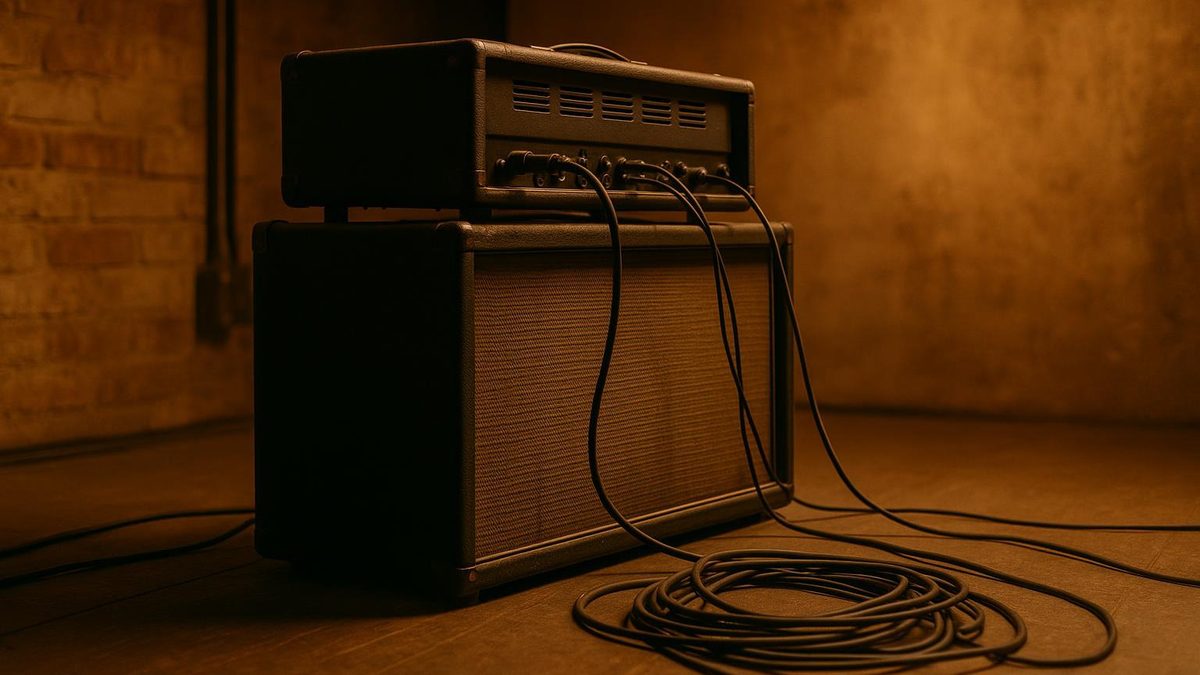
Replace a blown fuse only with the exact rating and type printed by the fuse holder or on the schematic: T means time lag (slow blow), F means fast acting. Never fit a higher rating. If the new fuse blows instantly, stop: there's a hard short. If it lasts a few seconds and then blows, suspect a power tube or the bias circuit.
Decode your fuse marking
Type what’s printed on the fuse or by the holder, answer three quick questions, and you’ll know exactly what to fit and what the blow is telling you.
It’s on the metal end cap, or printed by the fuse holder or on the schematic. For example T2AL250V, F1A or 500mA slow blow.
First, find the right fuse
Most tube amps have a mains fuse, and many also have smaller fuses on the high-voltage supply. A blown mains fuse kills everything, including the pilot light. A blown high-tension fuse leaves the pilot light on and the heaters glowing while the amp makes no sound. That's a useful clue before you open anything.
Some amps have several fuses of very different sizes. A 1960s Fender combo of the Deluxe Reverb class uses a single 1 amp slow blow on the mains. A Vox AC30CC has three: a 500 milliamp time lag, a 6.3 amp time lag, and a 5 amp. Finding one of them intact tells you nothing about the others.
How to read the marking
- T means time lag, also called slow blow. It rides out the big inrush when transformers and capacitors charge at switch-on. A tube amp's mains fuse is almost always time lag.
- F means fast acting.
- The number is the continuous current rating. The voltage rating must be at least the circuit voltage.
- Export versions differ. A 230 or 240 volt version of an amp draws about half the current of the 120 volt version, so its fuse is rated lower. Drawings often list both; use the one that matches your mains.
Put a fast fuse where a time lag one belongs and the amp blows a fuse every few switch-ons. Then the owner fits something bigger to stop the nuisance, and that's how the real damage starts.
Never fit a higher rating
A bigger fuse doesn't fix anything. It stops blowing by letting the transformer burn instead. A fuse with too low a rating pops on power-up for no reason. Use the one printed by the holder or on the drawing, every time.
Check it properly
Unplug the amp first. Pull the fuse and hold it up to the light, or check it with your meter's continuity setting. Then look at how it failed:
- Blackened glass or a silver smear inside: a hard short, such as a power tube arcing or a filter cap letting go. Don't just put in a spare and hope.
- Clean glass with the wire broken at one end: often a surge, or a tired fuse that gave up.
Instant blow vs delayed blow
It blows the instant you switch on. That's a hard short on the high-voltage supply. The usual suspects are a shorted rectifier tube or diode, or a filter capacitor that has failed internally. Stop and don't feed it more fuses.
It holds for a few seconds, then blows. That points to excessive current draw, usually a power tube in thermal runaway or a failing output transformer winding.
It blows when you flip from standby to play right after fitting new power tubes. A shorted tube, or a bias supply that has failed and left the tubes uncontrolled. See how to bias a tube amp.
Finding the cause
This means working inside the chassis. Read the safety rules in guitar amp repair: where to start first, and if you're not comfortable around high voltage, this is the point to call a tech.
For a delayed blow, use a light bulb limiter: a 60 to 100 watt incandescent bulb in series with the amp's power cord. Power on with no tubes; the bulb should glow dim and steady. Add the rectifier tube, then the power tubes one at a time. If the bulb goes bright when a particular tube goes in, that tube is drawing too much current. Address the bias circuit before risking another fuse.
For an instant blow, unplug the amp and discharge every filter cap first. Then measure resistance from the first filter cap's positive terminal to chassis ground. Under 1k ohm means a short downstream. Pull all the tubes and measure again: if the short clears, one tube is shorted internally. If it stays, it's the wiring or a filter cap.
If it blows in the middle of a gig
- Stop and unplug the amp from the wall. The power switch isn't your safety; unplugging is.
- Look at the fuse. Blackened or smeared means a hard short. Clean with a break at one end may be a surge.
- Pull the power tubes before the spare fuse goes in. Power up with no power tubes. If the fuse holds, the fault was in one of them.
- Test one good power tube in each socket in turn. You can often finish the gig on one good tube at reduced power.
- If the spare blows with no tubes in, it's a hard short in the rectifier, a filter cap, or the transformer. The amp is done for the night.
Skipping step 3 is how people end up with no fuses and no amp.
Solid-state amps
Solid-state amps usually have fast-blow fuses on the DC supply rails and often a slow-blow fuse on the mains. Most use 5x20 mm fuses rather than the 3AG size common in tube amps. Use the value on the schematic or the board's silkscreen; a previous owner may have fitted something far too big to hide a recurring short.
- Loose fuse clips heat the fuse ends and can make it blow below its rating every few weeks. Squeeze the clips gently with needle-nose pliers so they grip.
- An instant blow suggests a shorted output transistor or a shorted bridge rectifier.
- A dead amp with no pilot light and good fuses may have a blown thermal fuse clamped to the heat sink. It means the output stage overheated, so find out why before you replace it.
Keep spares
Stock 3AG and 5x20 mm fuses in 1, 2, and 3 amps, in both fast acting and time lag, so you're never tempted to improvise. Then keep the right ones for your amp in your gig bag.
What you need to fix a blown fuse
- 3AG time lag fuse kitSlow blow spares in 1, 2 and 3 amps. Fit only the rating printed by the holder.See options on Amazon →
- 3AG fast acting fuse kitFast acting spares, so you never improvise with the wrong type.See options on Amazon →
- Digital multimeterCheck the fuse for continuity, and measure for a short before you fit another.See options on Amazon →
- 5x20 mm time lag fuse kitMost solid-state amps use 5x20 mm fuses. Match the value on the board.See options on Amazon →
- 5x20 mm fast acting fuse kitFor the DC supply rails of a solid-state amp, at the marked value.See options on Amazon →
- 100 W incandescent bulbFor a light bulb limiter: 60 to 100 watts, wired in series with the power cord.See options on Amazon →
These are Amazon links. If you buy through them I earn a small commission, at no extra cost to you.
Keep the checklist on your bench
Get the free pre-power checklist: the no-sound gauntlet in the right order, plus the gig-day kit that fits in your gig bag.
One free PDF, delivered instantly. No spam, unsubscribe anytime.
DIY Guitar Amp Repair
Tube and solid-state amps: bench safety, no sound, crackle and hum, tubes and biasing, speakers, filter caps, jacks, and gig-day fixes.
Read it on Amazon →Can I use a higher amp fuse in my guitar amp?
No. Always fit the exact rating and type printed by the fuse holder or on the schematic. A bigger fuse stops blowing by letting the transformer burn instead.
Why does my amp blow a fuse as soon as I turn it on?
An instant blow means a hard short, most often a shorted rectifier or a failed filter capacitor. Don't keep feeding it fuses. Find the short first, or take it to a tech.