
How to make kombucha that actually tastes good.
Kombucha is sweet tea handed to a living culture for a week or two. The recipe is simple. What makes it good is cooling the tea, using enough starter, and tasting your way to the finish instead of trusting the calendar.
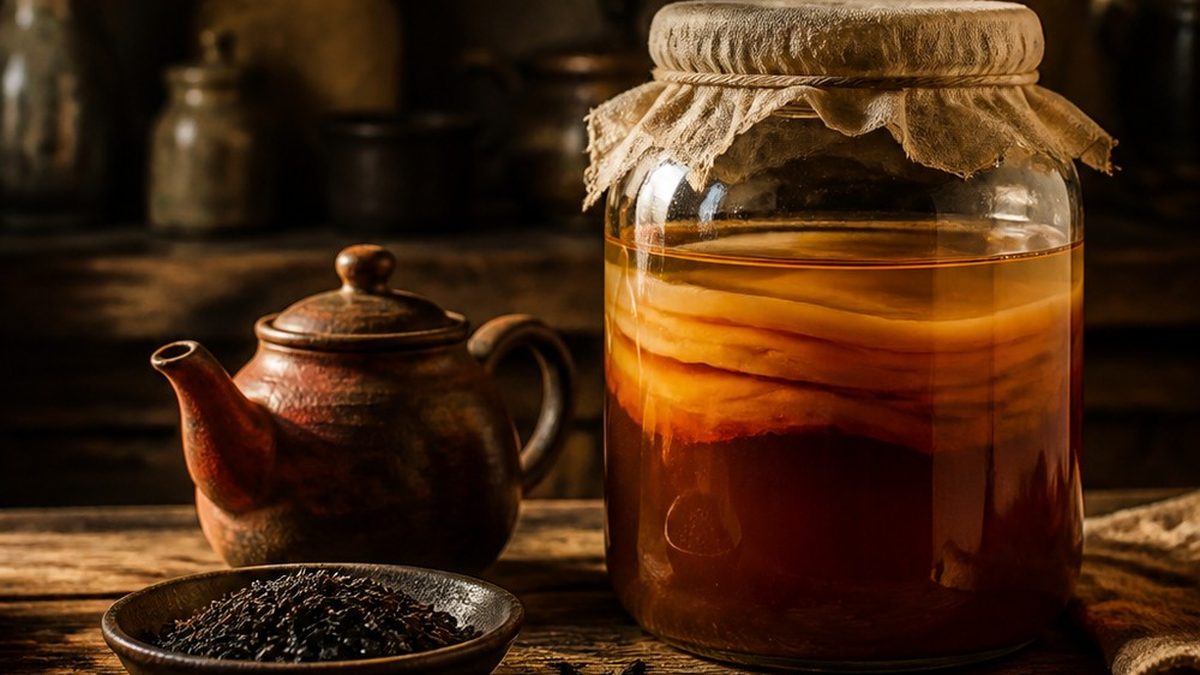
For one gallon: 1 cup white sugar, 8 tea bags (or 2 tablespoons loose black or green tea), 1 to 2 cups mature unflavored kombucha as starter, and 1 SCOBY. Brew the sweet tea, cool it completely, add the starter and SCOBY in a glass jar, cover with cloth, and keep it at 75 to 85°F. Start tasting on day 7; most batches finish between 7 and 14 days.
Scale the recipe to your jar
Enter your jar size and you will get the sugar, tea, and starter for it, with the steps in order.
Glass only. Anything from 1 quart up to 5 gallons.
What you need
- A one-gallon glass jar. Glass only. Never metal, and never decorative or hand-glazed ceramic, because the acid pulls metal and lead out of the wrong container.
- A tight-woven cloth and a strong rubber band. Hold the cloth up to the light: you want light through the weave but no open holes. Loose cheesecloth lets fruit flies through. Never use a sealed lid for this first ferment.
- Real tea. Caffeinated black or green tea, not herbal blends. Skip oily teas like Earl Grey.
- Plain white sugar. Not honey, brown sugar, maple, or zero-calorie sweeteners. The culture runs cleanest on white sugar.
- A SCOBY and starter liquid. One to two cups of mature, unflavored kombucha, from your last batch or a bottle of raw, unflavored store kombucha. No SCOBY yet? You can grow one from a store-bought bottle.
The recipe, step by step
- Clean up. Wash your hands and the jar with unscented soap, and rinse until the glass squeaks with no slick feel left.
- Make the sweet tea. Boil the water, stir in the cup of sugar until it fully dissolves, then take the pot off the heat and add the tea. Steep until it tastes like a strong cup you would drink plain, then remove the bags. Let them drip rather than wringing them, which adds harsh tannins.
- Cool it completely. Wait until there is no steam and the side of the pot feels neutral to your hand. To speed it up, set the pot in a cold-water bath in the sink and stir. Do not add ice or top up with cold water, which only dilutes the base.
- Add the starter. Pour the cooled tea into the jar and add 1 to 2 cups of mature, unflavored kombucha. Lean toward 2 cups for a first batch or a cool room. This makes the jar acidic from the first hour, which is your protection against mold while the new layer forms.
- Add the SCOBY. With clean hands, slide it in. Floating, sinking, or tilted, every position is fine. Do not rinse it or peel it apart.
- Cover it and leave it alone. Cloth and band on top, then set the jar somewhere at 75 to 85°F, out of direct sun, where it will not get bumped. Label the date. Every jostle tears the new skin and resets the clock.
Taste it, and stop at the right moment
Start tasting on day 7. Slide a clean straw or spoon down the side of the jar, under the new skin, and draw a small sip without breaking the top. Taste the same way at the same time each day.
- Sweet with a little tang: it needs more time.
- Clean tartness with a thread of sweetness left: this is the window. Bottle it.
- A hard vinegar bite: it ran too long. It is not wasted; use it as strong starter for the next batch, and taste earlier next time.
Warmth is the main lever. Inside 75 to 85°F the culture stays balanced; cooler slows it down, and warmer speeds it up. A wide jar also moves faster than a tall, narrow one.
When it tastes right, leave the SCOBY in the jar and pour the kombucha off, leaving enough behind to cover the SCOBY. That leftover is the starter for your next batch. If you cannot bottle the same day, move the whole jar to the fridge with the cloth still on to hold the flavor where it is.
What a healthy jar looks like
A smooth, pale skin forms across the surface, thin at first, then thickening to cream. Brown, stringy strands hang underneath, and the smell turns clean and tangy, with a hint of apple or dry cider. Trapped bubbles under the skin, an uneven edge, and a sunken SCOBY are all normal.
The one thing that is not normal is mold: fuzzy, dry, and raised, in white, green, blue, or black, like mold on bread. If you see real fuzz, discard the whole batch and the SCOBY, clean everything, and start over. Never scrape it off and reuse the jar. If you are not sure what you are looking at, see how to tell kombucha mold from normal growth.
The four mistakes behind most failed first batches
- Adding the SCOBY to warm tea. Heat kills the culture. Cool it all the way first.
- Skipping the starter liquid. It is your mold shield in the first days. Always add it.
- The wrong vessel or a sealed lid. Glass only, and breathable cloth only, for the first ferment.
- Walking away past day 7. Once it is close, taste it daily. The finish is yours to call, not the calendar's.
When the batch tastes balanced, the next step is bottling it for flavor and fizz: see the second fermentation.
What you need to brew a gallon
- One-gallon glass jarGlass only. The acid pulls metal and lead out of metal or hand-glazed ceramic.See options on Amazon →
- Cloth covers and bandsA tight weave lets light through but keeps fruit flies out. Never a sealed lid for the first ferment.See options on Amazon →
- SCOBY with starter liquidOne SCOBY and 1 to 2 cups of mature, unflavored kombucha start every gallon.See options on Amazon →
- Black tea bagsEight bags per gallon of plain, caffeinated tea. Skip herbal blends and oily teas like Earl Grey.See options on Amazon →
- Unscented dish soapWash the jar and rinse until the glass squeaks, with no slick feel left.See options on Amazon →
These are Amazon links. If you buy through them I earn a small commission, at no extra cost to you.
Keep the checklist by the jar
Get the free SCOBY Rescue Checklist: whether what you are seeing is normal or a real problem, and how to fix the real ones.
One free PDF, delivered instantly. No spam, unsubscribe anytime.

Kombucha Brewing for Beginners
The full guide: the base recipe, tasting and timing, the second ferment, pH testing if you want it, troubleshooting, and keeping it going.
Read it on Amazon →How long does kombucha take to ferment?
About 7 to 14 days at 75 to 85 degrees F. Start tasting on day 7 and bottle when it tastes tart with a little sweetness left.
Can I use honey or herbal tea to make kombucha?
Not for the base. Use plain white sugar and caffeinated black or green tea. Save honey and herbs for flavoring in the bottle.