
Kombucha mold, or normal growth? Read the texture.
Almost everything that alarms new brewers is normal: bubbles, strands, jelly patches, a sunken SCOBY. Mold is the one hard stop, and it has a look you can learn in a minute.
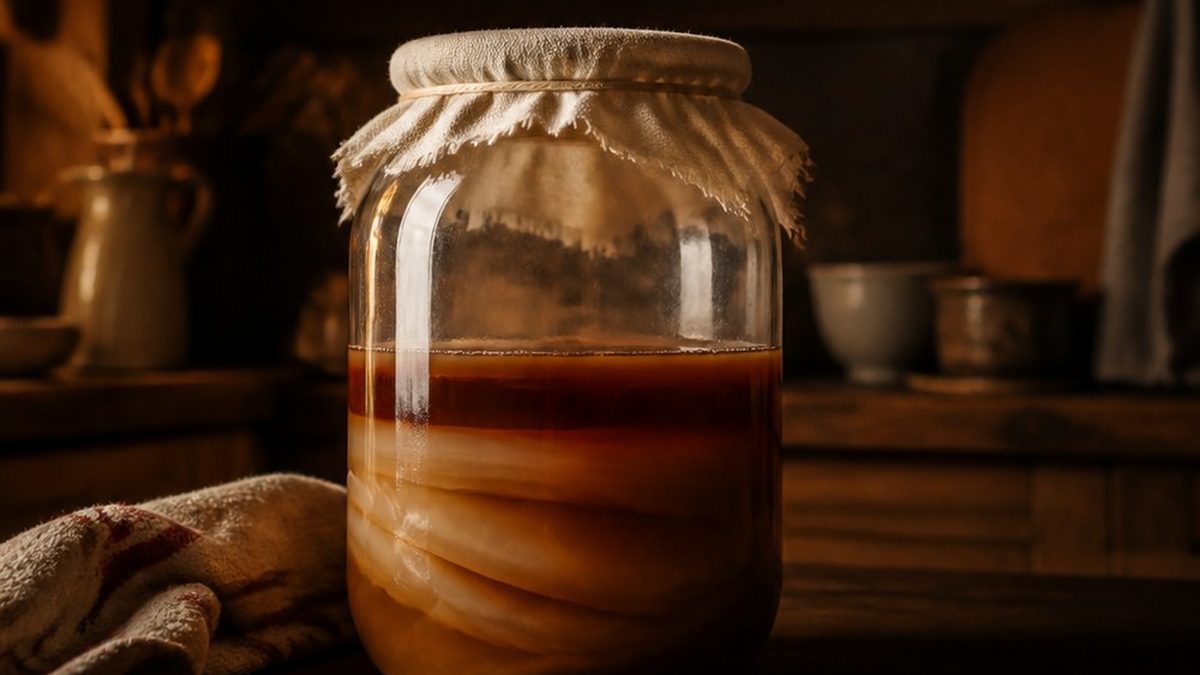
Wet and smooth is healthy growth. Fuzzy, dry, and raised, in white, green, blue, or black, like bread mold, is mold. If you see real fuzz, discard the whole batch and the SCOBY, clean everything, and start over. Never scrape it off and reuse.
Is it mold, or normal?
Four quick answers and you will know whether to keep going or start over.
Tip the jar gently. Fuzz looks like dust on velvet and casts a tiny shadow.
The pH one counts only if it stayed high even after more starter and warm time. Tap any that apply, or leave both off.
What healthy growth looks like
A healthy jar grows a smooth, wet, pale skin across the surface, thin and translucent at first and thickening to cream. Brown, stringy strands hang below it, and the smell is clean, tart, and tea-like, sometimes with a hint of apple. The new layer can be smooth or lumpy, creamy white to light tan, with trapped bubbles or a tea-stained edge. All of that is normal.
What mold looks like
Mold is fuzzy, dry, and raised, sitting on top of the liquid in white, green, blue, or black, like mold on bread, often in small spots or rings. Fuzz looks like dust on velvet and casts a tiny shadow when you tip the jar. Mold never looks wet, and it never hangs in ropes below the surface.
The single test is texture: wet and smooth means keep going; dry and powdery is the one warning sign.
Things that look scary but are normal
- Blisters and domes under the skin: trapped bubbles.
- Tan freckles and dark specks: tea stains.
- Clear or milky jelly patches: young growth that will thicken into the skin you want.
- Brown strands, rafts, and sediment on the bottom: yeast, not mold.
- A SCOBY that sinks, floats, tilts, or tears: fine. It grows a new layer on the new surface and keeps working.
- A thin, flat, slightly oily film when growing a new SCOBY from a bottle: part of the process.
If it is mold: discard and start over
- Discard the whole batch, including the SCOBY. Never scrape the mold off and keep the rest, because the threads run deeper than you can see.
- Clean everything the batch touched, and do not reuse the batch for anything.
- Start fresh with a backup SCOBY from your SCOBY hotel, or grow a new one from a store-bought bottle.
Four signs that mean start over
Most problems are fixable, but these four mean stopping without a rescue attempt:
- Visible mold, fuzzy and raised as described above.
- A smell that is rotten, cheesy, or sharply solvent-like, rather than clean and tart.
- A pH that never dropped below about 4.2, even after you added more starter and gave it warm time.
- A batch that sat in reactive metal, in hand-glazed ceramic, or under an airtight lid.
One thing that is not a reason to toss: a batch that has gone sharp like vinegar but smells clean and shows no fuzz is simply over-fermented. Use it as vinegar in the kitchen, or keep a cup as strong starter, and bottle a little earlier next time.
How to keep mold out
- Always add 1 to 2 cups of mature, unflavored starter per gallon. The early acidity is what blocks mold while the new layer forms.
- Cool the sweet tea completely before the SCOBY goes in, so the culture gets a strong start.
- Keep it at 75 to 85°F. A cold jar acidifies slowly.
- Cover with a tight-woven, breathable cloth, never a sealed lid.
- Keep a SCOBY hotel so that if a batch ever molds, you have backup culture ready.
What you need to keep mold out
- SCOBY with starter liquidIf a batch molds, you start fresh with a new SCOBY and strong starter.See options on Amazon →
- Cloth covers and bandsA tight-woven, breathable cloth, never a sealed lid.See options on Amazon →
- Jar for a SCOBY hotelBackup culture, ready if a batch ever molds.See options on Amazon →
- pH test stripsA batch should drop below about 4.2. One that never does, even with more starter and warm time, means start over.See options on Amazon →
These are Amazon links. If you buy through them I earn a small commission, at no extra cost to you.
Keep the checklist by the jar
Get the free SCOBY Rescue Checklist: whether what you are seeing is normal or a real problem, and how to fix the real ones.
One free PDF, delivered instantly. No spam, unsubscribe anytime.

Kombucha Brewing for Beginners
The full guide: the base recipe, tasting and timing, the second ferment, pH testing if you want it, troubleshooting, and keeping it going.
Read it on Amazon →Can I scrape mold off a kombucha SCOBY?
No. Discard the whole batch and the SCOBY, clean everything, and start over. Mold threads run deeper than you can see.
Are the brown strings in kombucha mold?
No. Brown, stringy strands hanging below the SCOBY are yeast, and they are a normal sign of a working batch.