
How to polish stones by hand: the shine is in the sanding.
A high gloss comes from three things: the right compound, a firm pad, and a surface that's truly ready. Most cloudy finishes aren't a polish problem at all, just unfinished sanding showing through. Get the sanding right and the polish takes a couple of minutes.
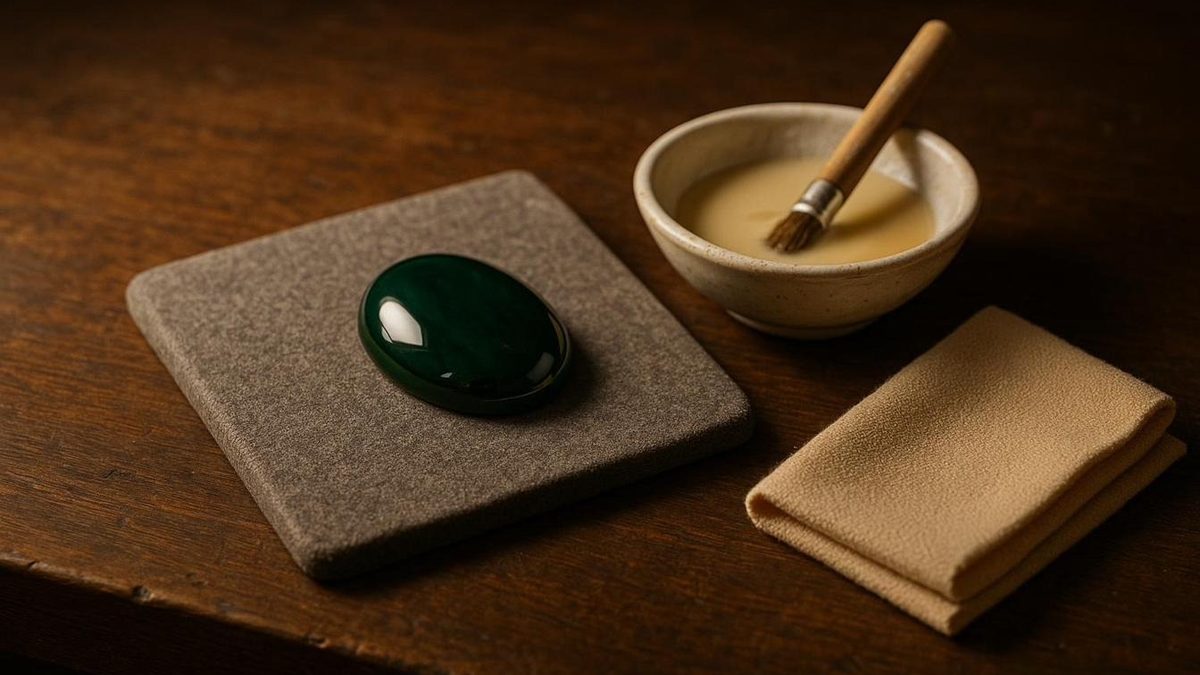
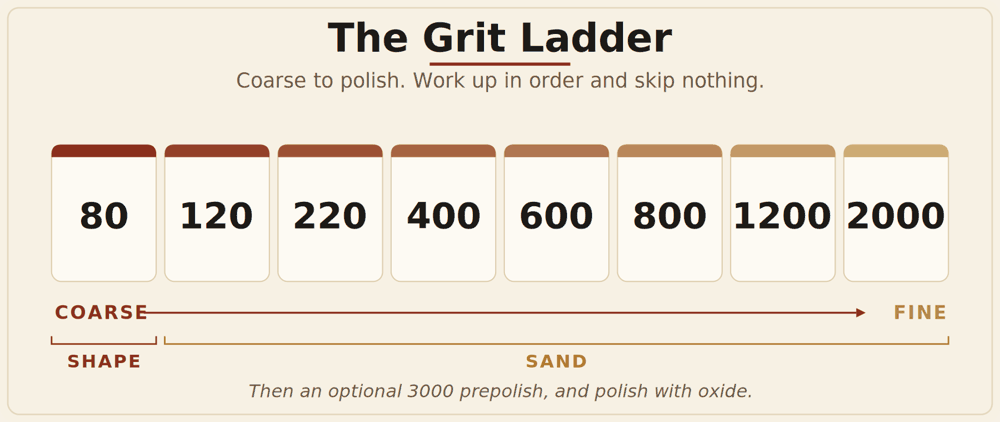
Sand in order: 80 or 120 to shape, then 220, 400, 600, 800, 1200, and 2000, with an optional 3000, clearing every scratch before you move up. Then polish with a thin oxide slurry on firm leather or felt with light pressure: cerium oxide for jasper, agate, and the quartz family, aluminum oxide for serpentine and feldspars, chrome oxide for a deep green glow on serpentine and some jade.
Which polish, which pad?
Pick your stone and, if you’ve hit a snag, what you see. You’ll get the compound, the pad and the fix.
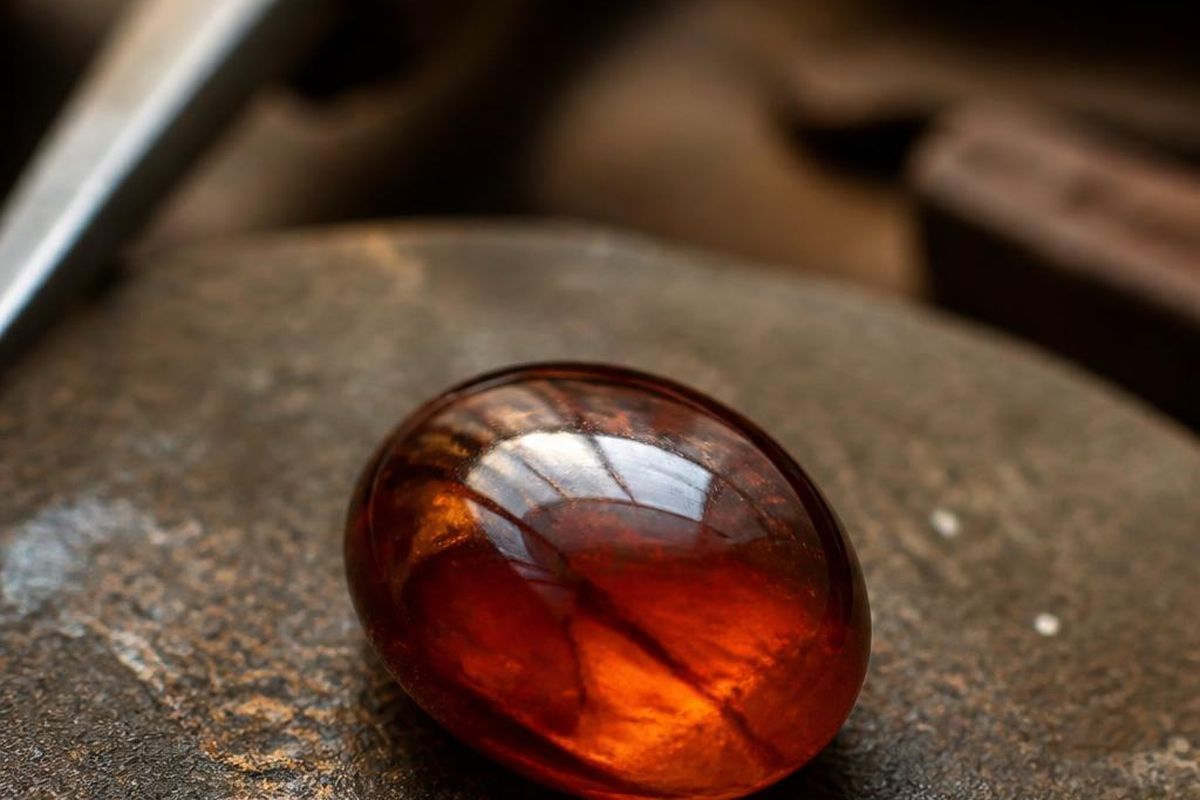
The water window: under a thin film of water and a bright light, tilt the cab until you catch a rectangular reflection. It should stay crisp as it sweeps across the dome.
Sanding is where the polish is made
Sanding doesn't make shine. Its job is to erase the scratches the last grit left and hand the polish a smooth, even surface. One ladder runs through the whole process: shape at 80, then climb 120, 220, 400, 600, 800, 1200, and 2000, with an optional 3000 prepolish. Quartz, jasper, and chert run the full ladder. Soft stones like serpentine start at 120.
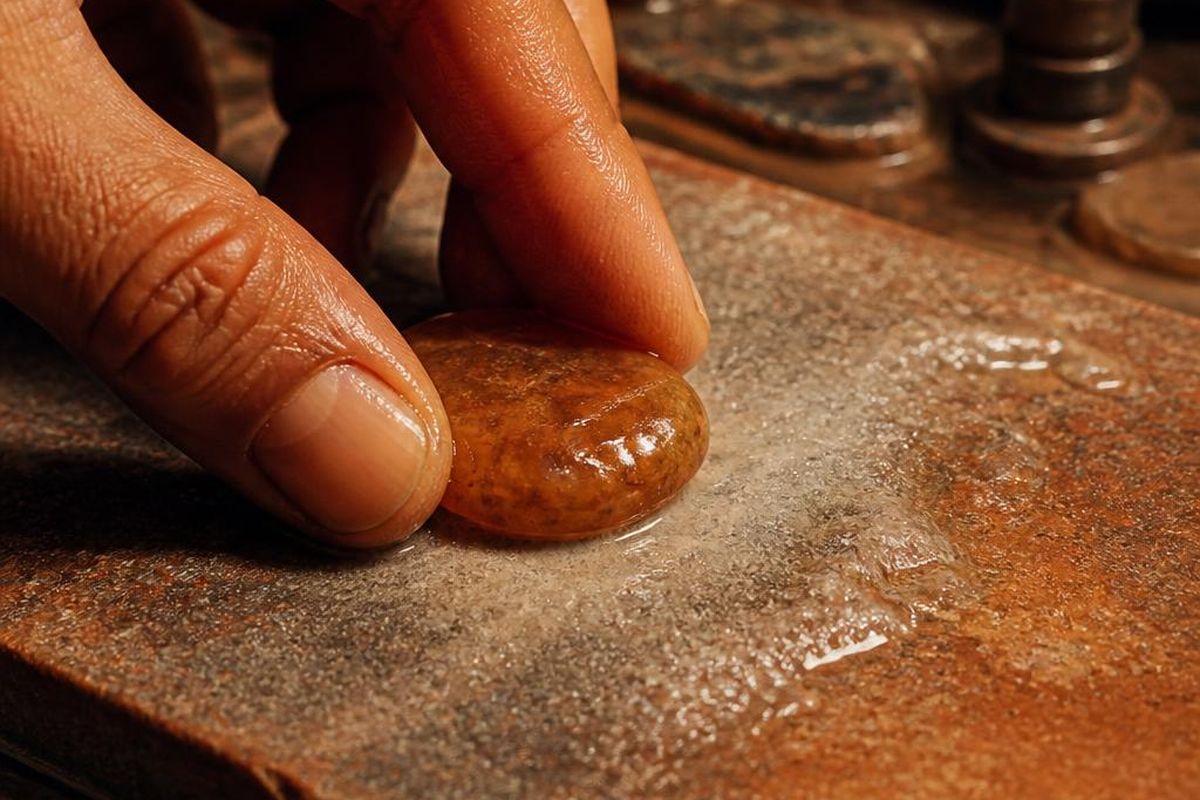
- Prove each grit with a crosshatch. Draw a light pencil grid, sand in one direction, then rinse and look. When every mark and every old scratch is gone and only your new lines remain, move up.
- Turn a quarter at each grit so the new scratches cross the old ones and leftovers stand out.
- Check with side light. Hold a flashlight low so it rakes across the stone. A deeper scratch flashes bright as you turn it. A loupe confirms every scratch runs the same way.
- Keep a firm backing. Paper wrapped over a ceramic tile or glass keeps the dome even and prevents the low spots that read as cloud at polish.
- Keep it clean. Rinse the stone, your hands, and the backing between grits, and keep each grit's paper in its own bag. One stray grain is most of the trouble.
- Light pressure. Let the grit cut. Warmth means you're dry or pressing too hard.
Know when it's ready
Use the water-window test. Under a thin film of water and a bright light, tilt the cab until you catch a rectangular reflection. From 2000 up, that window should stay crisp as it sweeps across the dome. If it blurs or breaks into lines, you're still carrying a scratch or a flat: drop back a grit. Polish only amplifies what the sanding left behind.
Before you polish, wash the cab in warm soapy water, scrub the girdle with a soft toothbrush, and rinse your fingernails too, where grit loves to hide.
Pick the compound for the stone
| Stone | Compound | Touch |
|---|---|---|
| Jasper, agate, quartz family | Cerium oxide | Prepolish to an even 2000 to 3000, tight circles at light fingertip pressure |
| Serpentine and soapstone | Aluminum oxide, then chrome oxide for a richer green | Prepolish to 1000 to 2000, feather-light, surface just damp |
| Moonstone, labradorite | Aluminum oxide | Extremely light, quick passes on a dedicated pad; they bruise if they overheat |
| Nephrite jade | Chrome oxide on leather wrung nearly dry | Lightest touch, always moving |
| Unknown stone | Test cerium in one corner for a minute | If it stays hazy, rinse everything and switch to aluminum oxide on a clean pad |
Keep a labeled jar and a separate pad for each compound, and never let them cross.
The pad and the slurry
Use a firm pad. Vegetable-tanned leather contact-cemented to a flat wood block, or quarter-inch industrial wool felt on a glass tile, about the size of a playing card. Steer clear of foam, mouse pads, and soft craft felt, which round the edges and leave orange-peel haze.
Mix a thin slurry. Shake the powder with water in a lidded jar until it's a thin cream that sheets rather than clumps. A drop of dish soap helps if it beads. Wear a mask while scooping the dry powder.
Charge, then go light. Dampen the pad, spread a thin film of slurry, and polish in small overlapping circles and figure-eights, rolling off the girdle rather than over it. Keep the pad just damp, never dripping. When the surface snaps to a wet-looking sheen, wipe it, inspect it, and give it one last light pass. The urge to bear down is the most common reason a polish goes wrong.
What about a rock tumbler?
A small vibratory tumbler can prepolish a batch of cabs and save your hands, but you don't need one to reach a high gloss, and for a single cab it isn't worth the bother. Use it only once domes are fully shaped and hand-sanded to about 600 to 800, run 1000 grit and then 3000, rinse thoroughly between stages, and still finish each cab by hand on leather.
Fixing polish problems
- Cloudy or milky patches: almost always unfinished sanding. Drop back to the finest grit that gave an even matte, often 800 to 1200, re-sand across your last direction, then climb back and repolish.
- Fresh scratches at polish: contamination or a drying pad. Stop, rinse the stone, your hands, and the pad, and pour the slurry through a coffee filter. If it persists, back up to 1500 to 2000.
- Orange peel: heat, a pad that's too soft, or polishing too early. Cool it with a damp pad and frequent misting, go to a firmer base, and confirm the prepolish.
- Rounded edges: a soft pad or letting it climb the rim. Switch to firm leather on wood or felt on glass and let your strokes exit the edge briefly.
- Stones that undercut (rhyolite, conglomerate, turquoise, lapis): take smaller grit steps on a firm backing. Some materials top out at a handsome satin around 1200 to 2000.
Before you cut serpentine: some serpentine and soapstone carry asbestos fibers, which are hazardous to breathe. Buy from a seller who confirms the stone is asbestos-free, keep it wet at every step, wear a P100 respirator, and never dry-work it. Treat any unlabeled green stone as suspect.
Never pour slurry down a drain. Let it settle in a lidded bucket, pour the clear water off, and bin the dried sludge. Shaping a stone from rough first? See how to cut a cabochon by hand.
What you need to polish by hand
- Wet/dry sandpaper, 80 to 3000 gritThe whole grit ladder. Keep each grit in its own labeled bag.See options on Amazon →
- Cerium oxideFirst choice for jasper, agate and the quartz family.See options on Amazon →
- Aluminum oxideFor moonstone, labradorite, serpentine and many feldspars.See options on Amazon →
- Chrome oxideFor nephrite jade on leather, and a richer green on serpentine.See options on Amazon →
- Hard polishing feltFirm felt on glass, never soft craft felt, which leaves orange-peel haze.See options on Amazon →
- 10x jeweler's loupeProve each grit: every scratch should run the same way before you move on.See options on Amazon →
These are Amazon links. If you buy through them I earn a small commission, at no extra cost to you.
Keep the checklist on your bench
Get the free Cabochon Starter Checklist: the beginner stones, the hand tools, the grit order, and the safety steps on one page.
One free PDF, delivered instantly. No spam, unsubscribe anytime.
The Hand-Tool Lapidary Handbook
Shape, polish, and finish gemstones by hand: forgiving stones, budget tools, the grit ladder, three first cabochons, carving, polish, and fixes.
Read it on Amazon →What is the best polish for stones?
It depends on the stone. Cerium oxide is the first choice for jasper, agate, and the quartz family. Aluminum oxide suits serpentine and many feldspars, and chrome oxide gives serpentine and some jade a deep green glow.
Why is my stone cloudy after polishing?
Cloudiness is almost always unfinished sanding. Drop back to the finest grit that gave an even matte, often 800 to 1200, sand until only one scratch direction shows, then climb back up and repolish.