
Forgot your starter in the fridge? Here is how to revive it.
It happens: the jar ends up behind the jam and weeks go by. Most neglected starters are completely salvageable. Expect it to be sour, separated and sleepy, and give it a few steady, warm days.
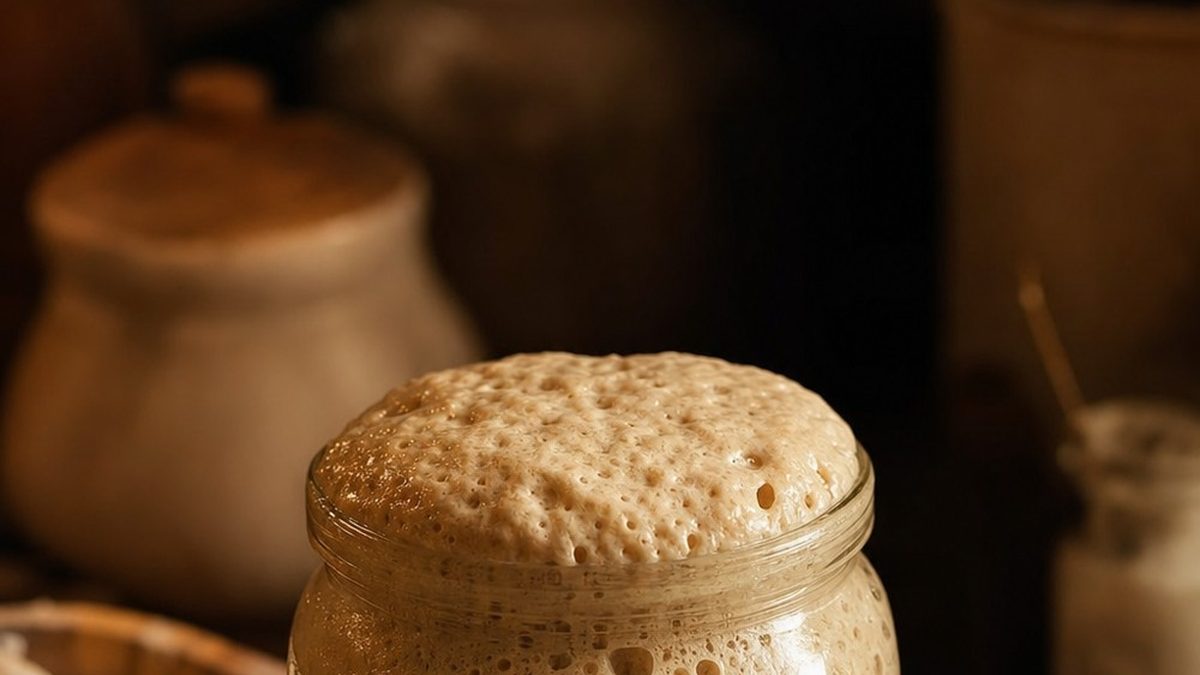
Pour off the hooch, move 20 g of clean starter to a fresh jar, and feed 1:3:3 twice on day 1 with some whole wheat or rye. On days 2 to 4, feed 1:2:2 twice a day at 75 to 80°F. When it doubles in 4 to 8 hours with a clean, tangy smell, it's back.
Plan your starter rescue
Tell me what’s in the jar and when you’ll start. You’ll get a 7-day feed schedule with the times and grams.
A sharp or boozy smell is expected. So is a jar that one feed won’t get rising.
What you'll find in the jar
Usually layers: liquid hooch on top, dense paste below, maybe a pale film. It smells sharp or boozy, and one feeding won't get it rising. That's expected. The culture isn't dead; it's underfed and too acidic. The job is to dilute the acid and rebuild the yeast.
One exception: fuzzy, brightly colored, or hairy growth is mold. In that case, discard it and start fresh.
Day 1: skim, move, and feed twice at 1:3:3
- Pour off the hooch. If there's a thin, matte white film that wipes away cleanly, skim that off too.
- Take 20 g from the clean center without scraping the sides, and put it in a freshly washed, well-rinsed jar. Mark the level with a rubber band.
- Feed 1:3:3: 20 g starter, 60 g room-temperature water and 60 g flour, with 15 to 30 g of that flour as whole wheat or rye. Mix to thick pancake batter, cover loosely and keep it at 75 to 80°F (24 to 27°C).
- Feed again about 12 hours later, or when it peaks and starts to level, whichever comes first. If it hasn't risen at all by 12 hours, feed anyway to keep lowering the acidity.
Days 2 to 4: 1:2:2, twice a day
Switch to 1:2:2 twice daily (20 g starter, 40 g water, 40 g flour) and keep it warm. Go back to mostly white flour, adding up to 25% whole wheat or rye only if it's still sleepy. Feed at or just after the peak, typically every 10 to 14 hours.
Log how long each feed takes to peak. A healthy rescue gets faster day by day: perhaps 12 hours on day 1, 8 to 10 hours on day 2, and 6 to 8 hours by day 4. If it spreads flat and the bubbles pop quickly, it's too thin, so add 5 to 10% more flour next time.
Days 5 to 7: until it doubles in 4 to 8 hours
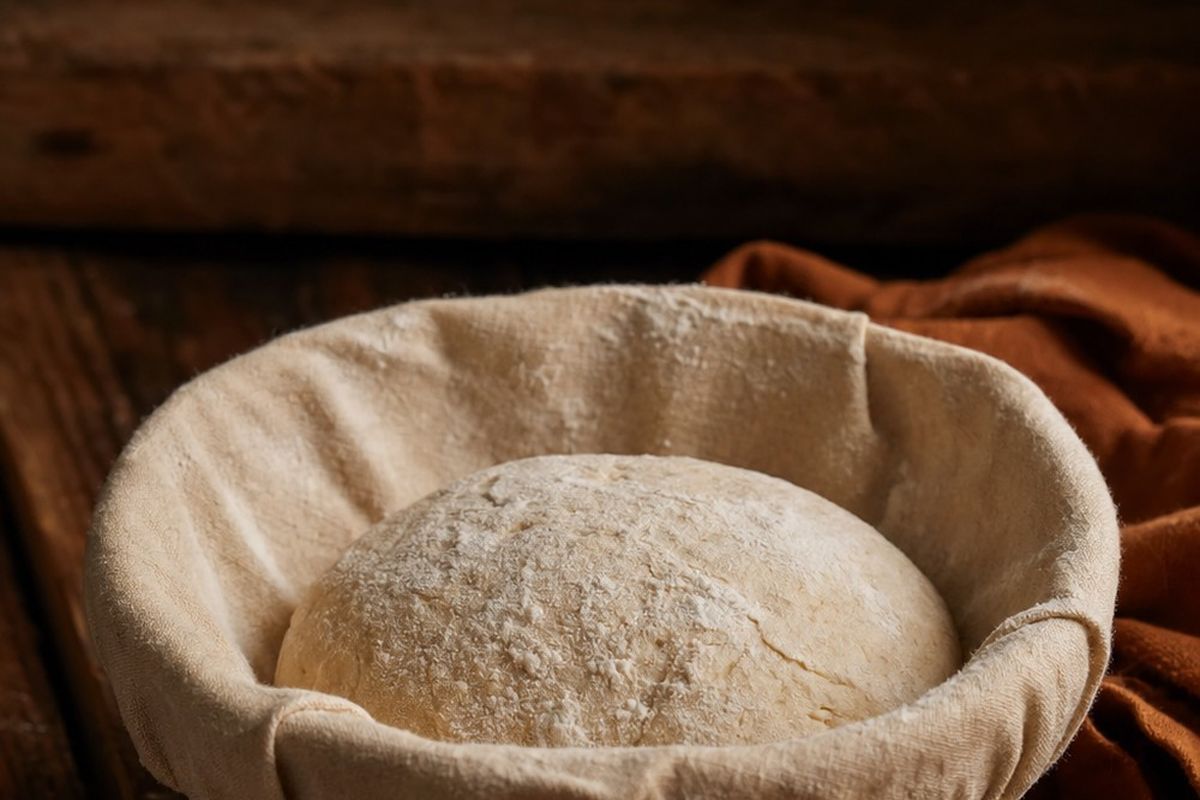
Keep giving it one or two warm feeds a day. You're aiming for a reliable double in 4 to 8 hours, a mild yogurt-like smell, and no fresh hooch between feeds. When it hits that window two days in a row, it's ready to bake with.
If it's still slow after day 4
- Try a single 100% rye feed, then go back to white flour.
- Check the basics: 75 to 80°F at the jar, chlorine-free water, and a loose cover.
- If it smells strongly of vinegar or nail polish, do one larger refresh (1:5:5) with white flour, then return to 1:2:2.
- Skip sugar or honey. They stress the culture and mask the real problem.
The most common mistakes are expecting one feed to undo weeks of neglect, and keeping the jar cold during the rescue. Warm it up and stick with it.
Before it goes back in the fridge
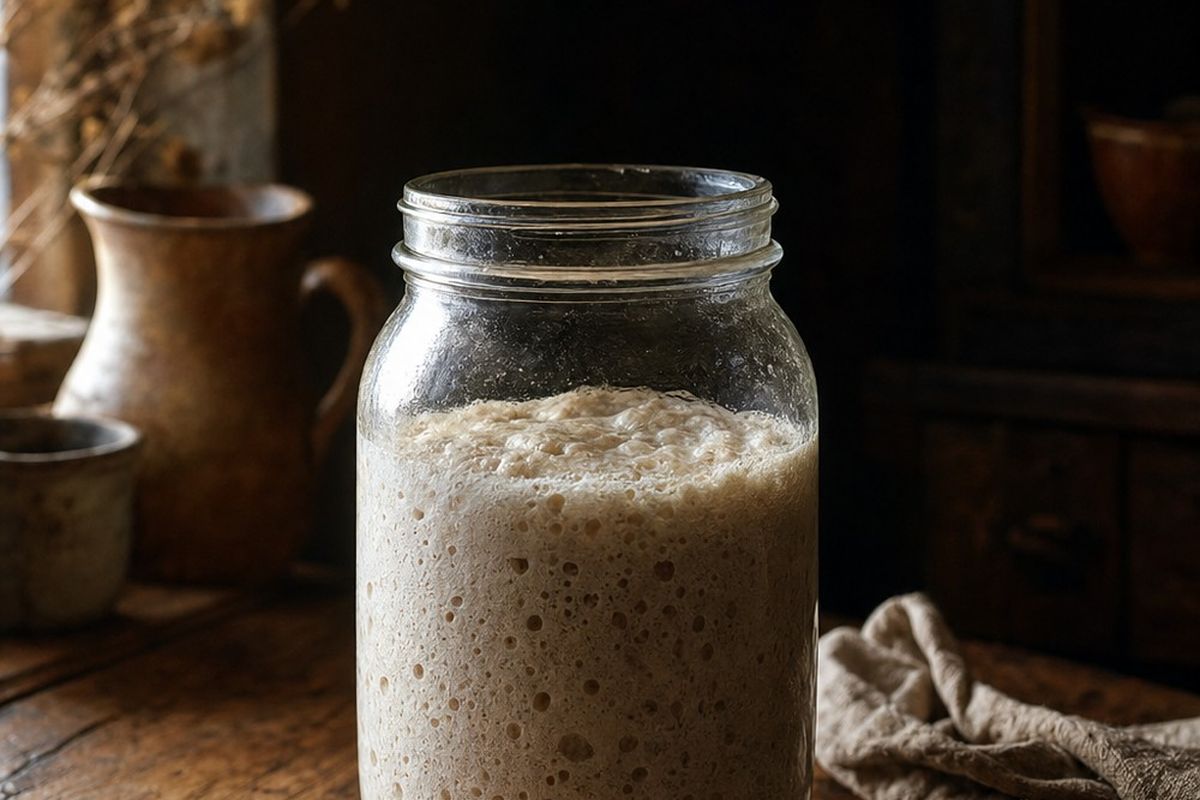
Feed it well and let it rise partway (30 to 50%) before chilling, so it goes into the cold strong rather than starving. In the fridge, feed it weekly or every other week. When you want to bake, take it out a day or two early and give it 2 or 3 warm feeds.
What you need for the rescue
- Digital kitchen scale (grams)The rescue runs on 20 g starter and exact 1:3:3, then 1:2:2 feeds.See options on Amazon →
- Whole rye flourA single 100% rye feed, or some rye in the first feeds, wakes a neglected starter.See options on Amazon →
- Seedling heat mat with thermostatKeeps the jar at 75 to 80°F. A cold jar is the most common reason a rescue stalls.See options on Amazon →
- Instant-read thermometerCheck 75 to 80°F at the jar, not the room.See options on Amazon →
- Spare starter jarsMove clean starter into a freshly washed jar on day 1.See options on Amazon →
- Mini silicone spatulaScrape the sides clean so old, sour starter doesn't linger.See options on Amazon →
These are Amazon links. If you buy through them I earn a small commission, at no extra cost to you.
Keep the fix next to the jar
Get the free one-page Starter Rescue Checklist: seven symptoms, the fix for each, and the feeding ratios in one place.
One free PDF, delivered instantly. No spam, unsubscribe anytime.
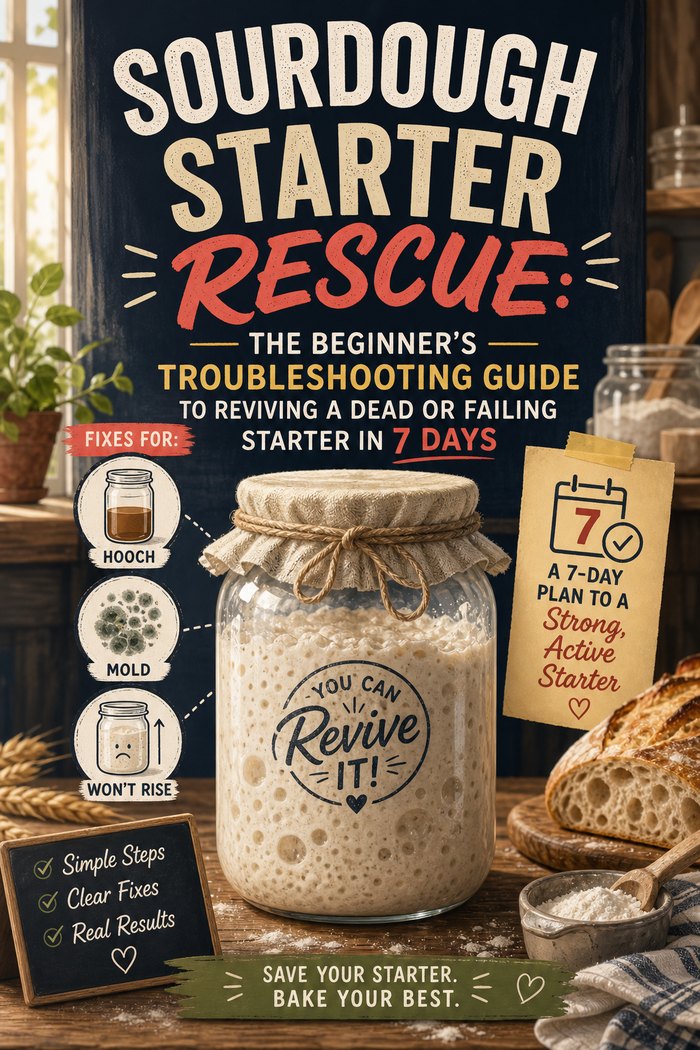
Sourdough Starter Rescue
The full guide: a 7-day plan to revive a dead or failing starter, plus a fix for every symptom, from hooch and mold to a starter that won't rise.
Read it on Amazon →How long does it take to revive a sourdough starter from the fridge?
Usually about a week of warm, steady feeds. Bubbles often return by day 2 or 3, and it should double reliably by day 4 or 5.
Is a starter that's been in the fridge for weeks dead?
Usually not. It's underfed and very acidic. Pour off the hooch, keep a small clean seed, and feed it warm on a steady schedule.