
Is it mold, or just kahm yeast? How to tell.
Most white layers on a starter are kahm yeast, a harmless film you can skim off. Real mold is rarer, and it means starting over. The difference comes down to one thing: texture.
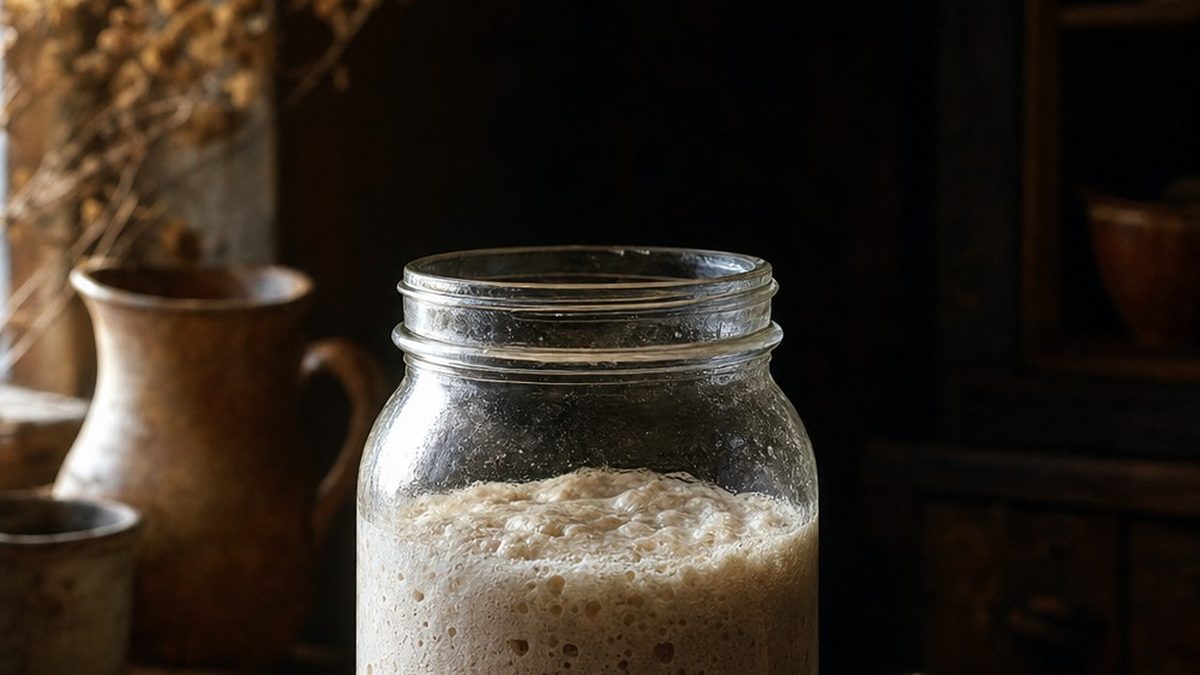
Flat, matte and paper-like is kahm yeast: skim it, save clean starter from below, and feed. Raised, fuzzy, or colored (green, blue, black, pink, orange) is mold: discard the whole starter and restart. If you're unsure, treat it as mold.
Mold or kahm yeast? Check yours
Look at the jar in good side light and answer five quick questions.
Tilt the jar and check the ring of dried smears and the underside of the lid.
Smell is a clue, not a test. If you can see fuzz, hairs or colored spots, skip the sniff.
Kahm yeast looks flat
Kahm yeast sits on the starter like a thin, matte skin. It's white to light gray, sometimes with faint islands or ripples, but the surface stays level, more like paper than cotton. In side light it looks dull rather than glossy, and you won't see tufts, hairs, or dots.
Two quick tests help. Tilt the jar: the sheet may slide over the wet surface in one piece. Poke straight down with a clean spoon and lift: kahm breaks neatly and sinks, with no cottony strands clinging to the spoon. If the starter underneath still smells tangy and shows small bubbles, you're looking at surface film, not spoilage.
Mold looks raised and fuzzy
True mold has height. You'll see tufts, hairs, or velvety pads standing up from the surface, often in distinct round colonies. Colors vary (green, blue, black, pink, even orange), but early mold can also be white and cottony. Viewed at an angle it casts tiny shadows. Touch it with a clean spoon and wispy strands cling or lift, like pulling at dryer lint.
Check where it's growing
Kahm usually blankets the wet top in one thin, continuous sheet and rarely climbs dry glass. Mold often starts where starter has dried: on the upper walls, the rim, or under the lid. Tilt the jar in good light and check the ring of dried smears and the underside of the lid. Fuzzy dots up high mean mold. If fuzz has bridged from the wall into the starter, discard it.
Smell is a clue, not a test
Kahm may add a flat, slightly bitter or briny note. Mold often smells musty, like a damp basement, but early mold doesn't always smell strong. So use your eyes first: if you see fuzz, hairs, or colored spots, skip the sniff test and discard. A sharp nail-polish smell is a different problem, a hungry starter, and it responds to regular feeding.
If it's kahm yeast: skim, save, feed
- Skim it off. Lift the film with a clean spoon in slow, shallow strokes, like skimming foam from soup. Don't stir it back in. Then remove another thin layer, about 1 cm (½ inch), from just beneath the surface.
- Save clean starter from below. Slide a spoon down the side and scoop from at least 2 to 3 cm (about 1 inch) under the surface. Move 20 to 30 g into a spotless jar and discard the rest.
- Feed 1:2:2, a little thick. For example, 20 g starter, 40 g water and 40 g flour, mixed slightly thicker than pancake batter. Fill the jar at least a third full so less surface is exposed.
- Keep it warm and fed. 75 to 80°F (24 to 27°C), every 12 hours for 2 to 3 days. Scrape the walls clean after each feed and keep the lid loose.
Once the culture is active and fed on time, the film usually doesn't come back. If it does, keep up the 12-hour feeds for another 48 hours, nudge the warmth toward 78 to 80°F, and swap about half the flour for rye or whole wheat in one feed a day for two days.
If it's mold: discard and restart clean
Don't scoop off mold and keep the rest. Disturbing it spreads spores you can't see. Discard the whole starter, then wash the jar and any tools that touched it in hot, soapy water, rinse well, and let them dry fully. Restart with fresh flour and water (30 g of each) and feed 1:2:2 every 12 hours in a warm spot. A healthy culture builds back quickly.
How to keep both away
- Feed before the surface dries out, and keep the mix scoopable rather than pourable.
- Scrape the walls down after every feed. Dried smears are where mold gets started.
- Move to a clean jar every day or two during a rescue.
- Cover loosely, never airtight, and keep the jar out of drafts.
- Keep vinegar out of the starter. If you use it, wipe the rim with it only.
What you need to save it or start clean
- Spare starter jarsMove clean starter into a spotless jar, and swap to a clean jar every day or two during a rescue.See options on Amazon →
- Digital kitchen scale (grams)Save 20 to 30 g, then feed 1:2:2: 20 g starter, 40 g water and 40 g flour.See options on Amazon →
- Mini silicone spatulaScrape the walls down after every feed. Dried smears are where mold gets started.See options on Amazon →
- Long-handled spoonSkim kahm in slow, shallow strokes and scoop clean starter from 2 to 3 cm down.See options on Amazon →
- Whole rye flourIf the film comes back, swap about half the flour for rye in one feed a day for two days.See options on Amazon →
These are Amazon links. If you buy through them I earn a small commission, at no extra cost to you.
Keep the fix next to the jar
Get the free one-page Starter Rescue Checklist: seven symptoms, the fix for each, and the feeding ratios in one place.
One free PDF, delivered instantly. No spam, unsubscribe anytime.
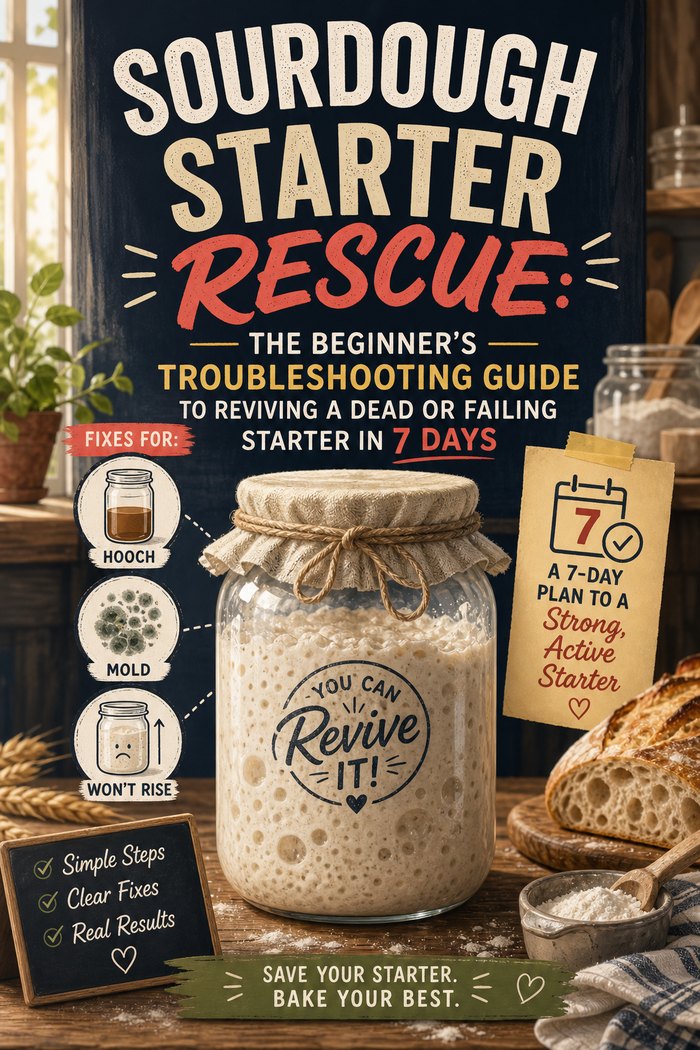
Sourdough Starter Rescue
The full guide: a 7-day plan to revive a dead or failing starter, plus a fix for every symptom, from hooch and mold to a starter that won't rise.
Read it on Amazon →Is kahm yeast harmful?
No. Kahm yeast is harmless, but stirring it back in repeatedly can make the starter taste flat or bitter, so skim it off.
Can I scrape mold off a sourdough starter and keep it?
No. Discard the whole starter, wash the jar well, and restart with fresh flour and water.