
Porosity in your welds: find the source, then fix it.
Pinholes in a bead are trapped gas. It's one of the most common defects, and it usually traces back to one of two things: the shielding gas isn't covering the puddle, or something on the metal or filler is giving off gas.
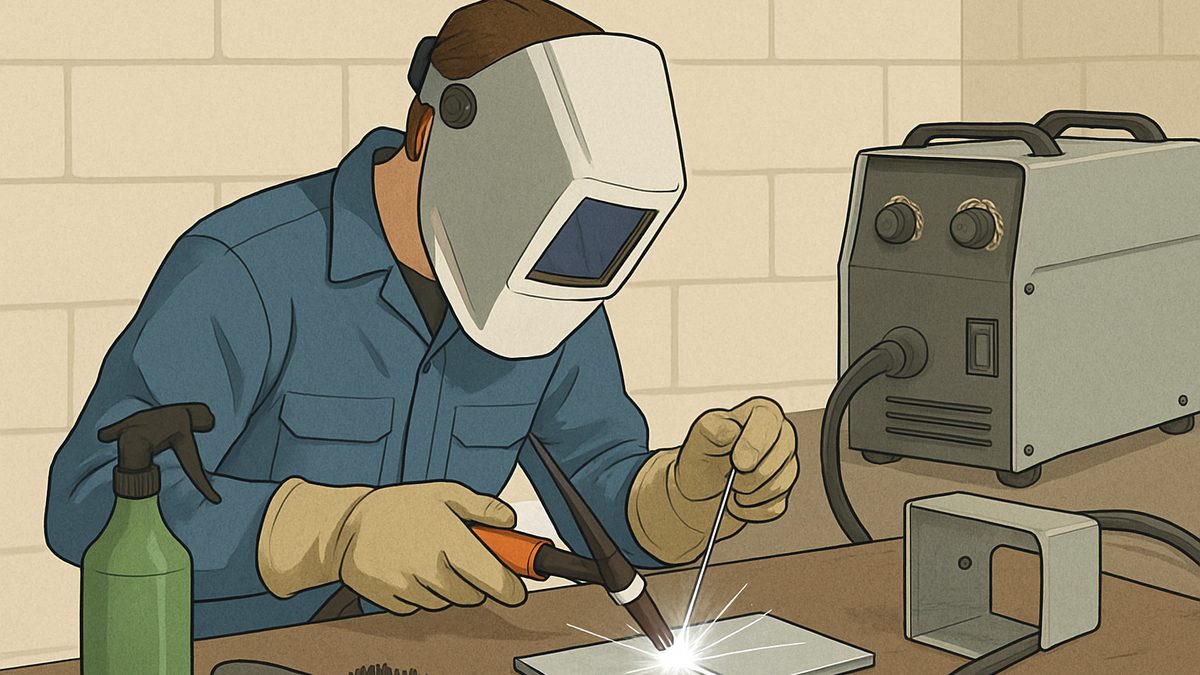
Porosity is a gas or contamination problem. Check the gas first: regulator setting, leaks in hoses and fittings, flow at the nozzle (usually 15 to 25 CFH), and a clean nozzle. Then clean the metal: oil, rust, paint, and mill scale, and keep filler and electrodes dry. If it persists, grind back to sound metal and reweld after you've fixed the source.
What porosity looks like
Porosity shows up as scattered pinholes, larger pits, or blisters in the bead. It hurts both the look and the strength of the weld. Fine porosity can be hard to see, so use a loupe or a close-up phone photo when you check.
Where the gas comes from
- Poor shielding gas coverage. Low flow, a leak, a dirty nozzle, a draft, or so much flow that it turns turbulent.
- Surface contamination. Oil, rust, paint, grit, and mill scale on the joint.
- Moisture. Damp electrodes or wire, or water trapped in the joint.
- Gaps in fit-up that let outside air into the puddle.
Step 1: check the shielding gas
- Confirm the regulator setting and check the flow with a flowmeter.
- Look for leaks in hoses and fittings. A quick gas-only purge on a scrap piece shows whether coverage is steady.
- Clean or replace the nozzle. Nozzles carbon up fast; clear the spatter after each session.
- Check your angle. Hold a travel angle that keeps the gas over the molten pool.
Step 2: get the flow rate right
For MIG, flow usually sits between 15 and 25 CFH. Small nozzles in a calm shop lean toward 15 to 18. Larger cups, spool guns, and drafty shops need 20 to 25. In a small enclosed booth, start at the low end and raise it if you see porosity.
More isn't always better. Too much flow causes turbulence, which pulls air in and causes porosity of its own. Whistling or an erratic arc points to over-shielding. Pinholes point to under-shielding. Change the flow in small steps and test on scrap.
Aluminum needs 100% argon and a bit more flow, often 20 to 30 CFH. For mild steel, 75/25 or 90/10 argon/CO2 works well. On TIG, check the cup size as well as the flow.
Step 3: clean the metal and dry the filler
Wipe the joint with a degreaser or acetone, and remove rust, paint, grit, and mill scale. ER70S-6 wire tolerates slightly dirty or rusty steel better than bare wire, but clean metal is still the fix. Store filler dry, and oven-store stick electrodes and wire when the type calls for it. Use the right gas mix for the alloy you're welding.
If porosity keeps showing up with the gas sorted, look at fit-up. Gaps let ambient air in, so tighten them and raise the shielding slightly.
Repairing a porous weld
Don't chase porosity at the surface. Grind into the hole until you reach clean, bright metal and find the cause, such as trapped contamination or old slag. Degrease, dry the part, then re-tack and reweld with dry filler and proper shielding.
Some welds must be repaired, never accepted. Parts that need to seal, like fuel or water containers, and anything carrying load are on that list, because porosity compromises them over time. For the full set of defects and the grind-or-accept test, see common weld defects.
What you need to track down porosity
- Argon/CO2 flowmeter regulatorCheck the flow instead of guessing. MIG usually sits between 15 and 25 CFH.See options on Amazon →
- AcetoneWipe the joint before you weld to clear oil and grease off the metal.See options on Amazon →
- Replacement MIG nozzlesNozzles carbon up fast. Clean or replace them so the gas stays over the pool.See options on Amazon →
- Jeweler's loupeFine porosity is hard to see. A loupe or a close-up phone photo shows it.See options on Amazon →
- Welding rod ovenFor stick electrodes and wire whose type calls for oven storage.See options on Amazon →
These are Amazon links. If you buy through them I earn a small commission, at no extra cost to you.
Keep the fault finder by the welder
Get the free Bead Fault Finder: match what you see to the likely cause and the fix for MIG, TIG, and stick.
One free PDF, delivered instantly. No spam, unsubscribe anytime.

Modern Welding for Makers
The whole small shop: power, ventilation, and layout, a chapter each on MIG, TIG, and stick, starting settings by thickness, and beginner projects.
Read it on Amazon →Can too much shielding gas cause porosity?
Yes. Too much flow turns turbulent and pulls air into the puddle. Stay around 15 to 25 CFH for MIG and adjust in small steps on scrap.
Why am I getting porosity when my gas is on?
Check for leaks in the hoses and fittings, a dirty nozzle, drafts, and the flow rate. Then look at the metal: oil, rust, paint, mill scale, damp filler, or gaps in fit-up.