
Weld undercut: what causes it, and the fix.
Undercut is a groove along the toe of the weld, right where the bead meets the base metal. It weakens that edge. The good news is that the usual causes are settings you can change on the next pass.
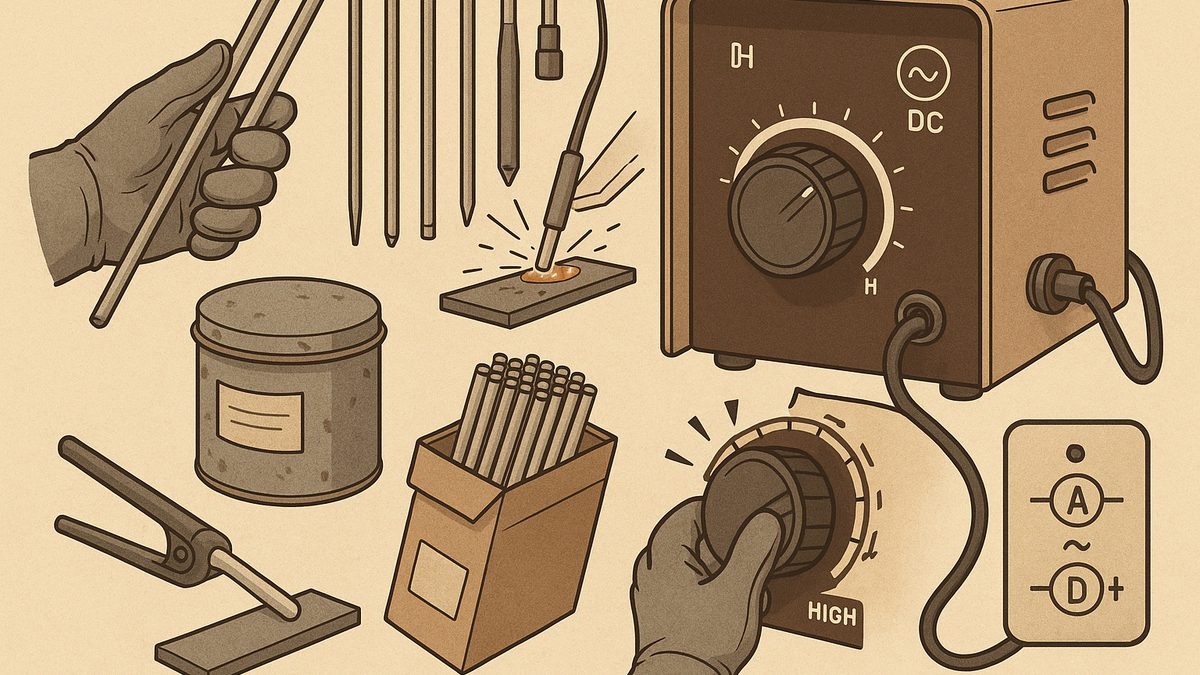
The most common causes are too much amperage and too long an arc. Fix it by dropping the amperage, shortening the arc, and slowing your travel a little, one change at a time on scrap. On a non-structural part, minor undercut can be ground and blended. In a load path, grind back to sound metal and reweld.
How to spot it
Look along both toes of the bead for a groove cut into the base metal. Run a gloved finger or a clean tool along the edge; undercut often feels sharp. A flat, wide bead with undercut at the edges points to too much heat or the wrong angle.
What causes undercut
- Too much current. Too high an amp setting blows the puddle out and leaves undercut. This is the first thing to check.
- Too long an arc. For solid-wire MIG, the arc should be about as long as the wire is wide. A long arc brings spatter, undercut, and a cold-looking bead.
- Travel speed. When undercut shows up, slowing your travel along with dialing down the current helps.
- The wrong torch or gun angle, which aims the heat at one side of the joint.
- Aluminum. It pulls heat away so fast that it's easy to undercut or burn through when travel speed and amperage aren't matched.
How to fix it on the next pass
- Drop the amperage a step, and run a short bead on scrap.
- Shorten the arc. Listen for the steady buzz of the right distance on MIG.
- Slow your travel slightly.
- Check the angle. On a MIG fillet, hold the gun about 15 to 20 degrees off vertical, tilted toward the direction of travel.
Change one thing at a time and compare the beads. Note what worked in your settings log so you don't repeat the problem.
Blend it or reweld it?
Ask three questions. Does it affect fit or assembly? Will it carry structural load or cyclic stress? Will it create a corrosion or sealing problem? If any answer is yes, repair it.
Repair it when the undercut sits in a primary load path, a joint root, or an area exposed to fatigue. Grind back to clean, bright metal, re-tack in a balanced pattern, and reweld with a shorter arc or lower amperage. Then check the area around the repair for new cracks or heat damage.
Blend it when it's minor and cosmetic on a non-structural part, especially one that will be painted, powder-coated, or given a patina. Use a 36 to 60 grit disc to correct the undercut, and grind the weld toes conservatively. Take off only what's needed for a smooth transition.
Undercut often shows up alongside other defects. The common weld defects guide covers how to read the whole bead.
What you need to fix undercut
- Grinding discs, 36 to 60 gritBlend minor cosmetic undercut and grind the toes conservatively.See options on Amazon →
- Angle grinderGrind back to clean, bright metal before you reweld undercut in a load path.See options on Amazon →
- Leather welding glovesRun a gloved finger along the toe. Undercut often feels sharp.See options on Amazon →
- Steel practice couponsRun a short bead on scrap after each change and compare the results.See options on Amazon →
These are Amazon links. If you buy through them I earn a small commission, at no extra cost to you.
Keep the fault finder by the welder
Get the free Bead Fault Finder: match what you see to the likely cause and the fix for MIG, TIG, and stick.
One free PDF, delivered instantly. No spam, unsubscribe anytime.
Modern Welding for Makers
The whole small shop: power, ventilation, and layout, a chapter each on MIG, TIG, and stick, starting settings by thickness, and beginner projects.
Read it on Amazon →Is undercut a serious weld defect?
It can be. Undercut weakens the edge of the weld. In a load path, a joint root, or a part under cyclic stress, grind it out and reweld. Minor undercut on a cosmetic part can be blended.
Does too much amperage cause undercut?
Yes. Too high an amp setting is the most common cause, along with an arc that is too long. Lower the amperage and shorten the arc first.