
How to feed a sourdough starter: ratios, timing, and what to watch.
Every feed is a reset. Fresh flour and water dilute the acid that built up since the last meal and give the yeast new food. Get the ratio and the temperature right, and a healthy starter doubles in 4 to 8 hours.
 By Morgan Reid, author of Sourdough Starter Rescue
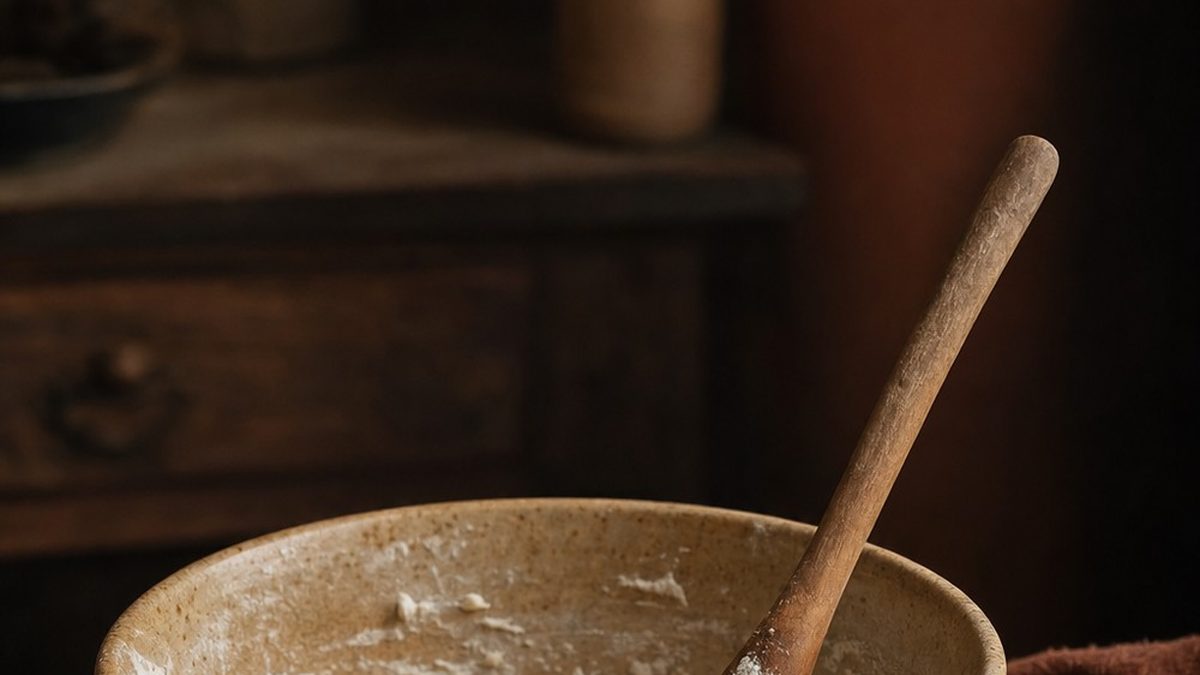
Discard down to 20 g of starter, then feed 1:2:2: 40 g water and 40 g flour, mixed to thick pancake batter. Keep it at 75 to 80°F (24 to 27°C). In a warm kitchen (78 to 80°F) feed heavier at 1:3:3; in a cool one (68 to 71°F) use 1:1:1 or 1:2:2. A healthy starter doubles in 4 to 8 hours.
Video: How to Feed a Sourdough Starter (Ratio, Timing, Temperature) (2:17). Watch on YouTube
How much should I feed it?
Enter how much starter you keep and the temperature at the jar. You’ll get the ratio, the grams of water and flour, and when to expect the peak.
20 g is the book’s default seed. Discard the rest first.
Measure at the jar, not the thermostat.
What a feed actually does
Your starter is a small team: yeast make the gas that lifts it, and bacteria make the acids that give it flavor. Warmth and fresh food favor the yeast. Long waits and a cool jar favor the acid, and too much acid means hooch and a slow rise.
Feeding resets that balance. Fresh flour brings starches the yeast can eat, and fresh water thins the mix and dilutes the acids and alcohols. Discarding first matters just as much: it removes most of the sour, spent starter so a small seed can take over a larger, cleaner meal. You're not watering it down. You're clearing the traffic jam so the yeast can grow and push gas again.
How to feed it, step by step
- Discard down to 20 g. Put 20 g of starter in a clean jar. Keeping the seed small stops runaway volume and acidity.
- Add 40 g of room-temperature water and stir to dissolve most of the lumps.
- Add 40 g of flour and mix until no dry bits remain. You want thick pancake batter: it should ribbon off the spoon, not pour like milk or stand like dough.
- Scrape the sides and level the top so the rise lines are easy to read.
- Mark the level with a rubber band and note the time. Keep the lid loose so gas can escape.
- Keep it at 75 to 80°F (24 to 27°C): an oven with just the light on, the top of the fridge, or a proofing box. A thermometer at the jar beats guessing.
A small digital scale removes the guesswork: tare the jar, add 20 g starter, then 40 g water and 40 g flour.
Pick the ratio for your kitchen
1:2:2 is the default, and room temperature decides when to change it.
- Warm room, 78 to 80°F: feed heavier at 1:3:3, for example 15 g starter, 45 g water and 45 g flour. Yeast burn through food fast here, and a healthy starter may peak in 3 to 6 hours.
- Comfortable, 75 to 77°F: 1:2:2. Expect a peak in about 4 to 8 hours.
- Cool room, 68 to 71°F: 1:1:1 or 1:2:2, for example 25 g of each, or 20 g starter with 40 g each of water and flour. 8 to 12 hours to peak is common. Skip big feeds like 1:5:5 in a cold room: they dilute it too far to protect the yeast.
Too warm for your ratio? You'll see hooch before the peak, a sharp nail-polish smell, or a starter that collapses soon after rising. Go heavier, to 1:4:4 if needed, or move the jar somewhere a little cooler (72 to 76°F). Avoid hot spots over 82 to 85°F.
No scale? Feed by volume
Use 2 tablespoons of starter, 1/4 cup of water and 1/3 cup of flour. Stir the water into the starter first, then add the flour. Fluff the flour before you scoop, fill the cup lightly and level it off without packing. Use the same cups and spoons every time, and adjust a teaspoon of flour or water at a time until it's thick pancake batter.
How often to feed it
- On the counter: feed daily at roughly 1:2:2, or 1:3:3 in a hotter kitchen. Aim for a steady double within your 12-hour window. If it gets hooch or smells sharp before the next feed, feed a little earlier or go heavier.
- When it's sluggish or you're rescuing it: feed every 12 hours, shortly after it peaks rather than hours later.
- In the fridge: once a week, discard to 20 g, feed 1:2:2 or 1:3:3, let it start for 1 to 2 hours at room temperature, then refrigerate it loosely covered. Many starters tolerate up to two weeks when well fed and cold.
- Before baking: take it out of the fridge the day before and give it 1 or 2 warm feeds at 1:2:2.
Running late? A 30 to 60 minute slip won't break anything. Feed as soon as you remember. To change your times, shift by 1 to 2 hours a day.
The flour and water you feed it
- Water: room temperature is fine. If your tap smells of chlorine, let it sit out 12 hours or use filtered water; some cities use chloramine, which doesn't dissipate, so filtering is more reliable. For a sleepy starter, use slightly warm water (80 to 85°F). Never use water of 100°F or more, and avoid distilled water long term.
- Flour: to wake up a slow starter, swap 25 to 50% of the white flour for whole wheat or rye for a few feeds, then go back once it doubles reliably. Skip bleached and self-rising flour, and change flours gradually over two or three feeds.
- No sugar or commercial yeast. They hide the real problem and fade once you stop using them.
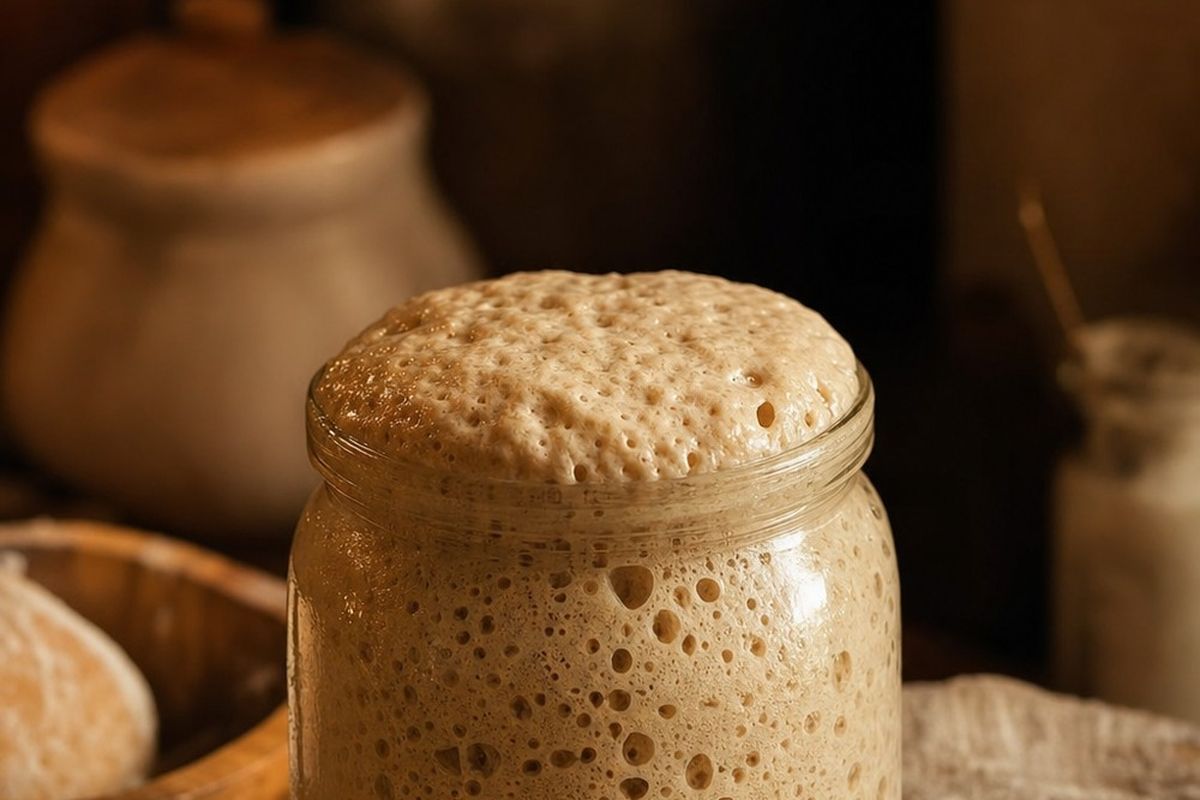
How to tell it's working
- It doubles in 4 to 8 hours at 75 to 80°F, with a domed top.
- Small, even bubbles run all through it, and the inside looks webby.
- It smells pleasantly tangy, like yogurt, not harsh or like solvent.
Peaking in under 4 hours and collapsing? Go to 1:3:3 next feed. Barely rising after 12 hours? Move it warmer (75 to 78°F) or add 25% whole wheat. Skip the float test: behavior beats buoyancy. Still stuck? See why a starter won't rise or what the liquid on top means.
What makes feeding easy
- Digital kitchen scale (grams)Feeds by weight are the most reliable: 20 g starter, then 40 g each of water and flour.See options on Amazon →
- Instant-read thermometerRoom temperature decides the ratio, so check 75 to 80°F at the jar, not the thermostat.See options on Amazon →
- Spare starter jarsDiscard into a clean jar, with headroom for the rise. A 24 to 32 oz jar works in a warm kitchen.See options on Amazon →
- Whole rye flourSwap 25 to 50% of the flour for rye for a few feeds to wake up a slow starter.See options on Amazon →
- Water filter pitcherChloramine in tap water does not dissipate, so filtered water is the reliable choice.See options on Amazon →
These are Amazon links. If you buy through them I earn a small commission, at no extra cost to you.
Keep the fix next to the jar
Get the free one-page Starter Rescue Checklist: seven symptoms, the fix for each, and the feeding ratios in one place.
One free PDF, delivered instantly. No spam, unsubscribe anytime.
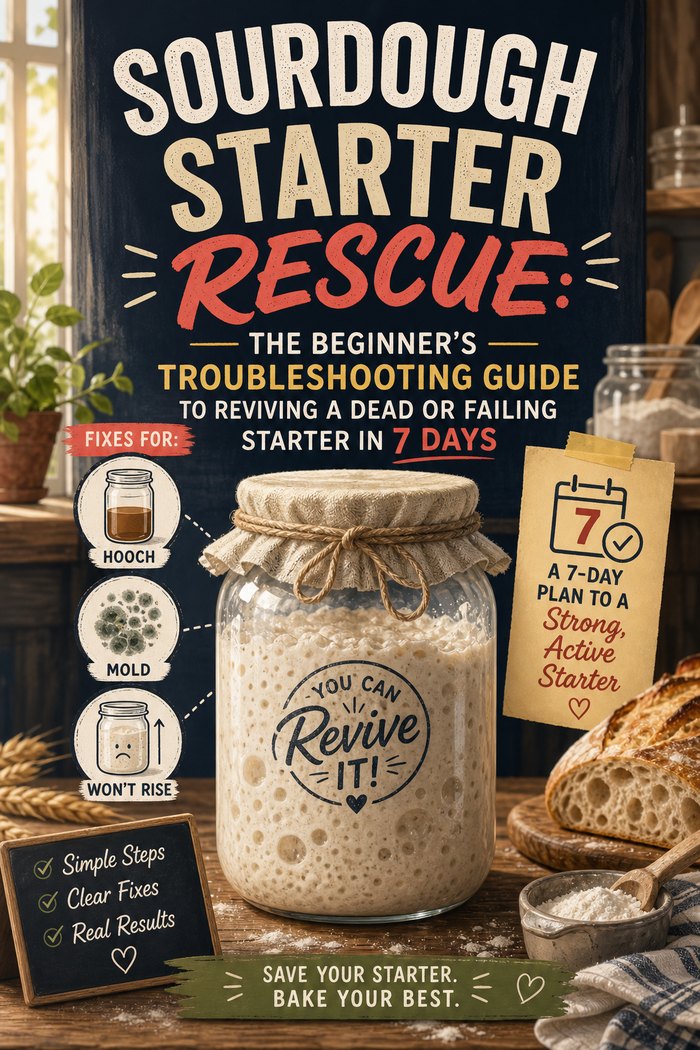
Sourdough Starter Rescue
The full guide: a 7-day plan to revive a dead or failing starter, plus a fix for every symptom, from hooch and mold to a starter that won't rise.
Read it on Amazon →What is the best feeding ratio for a sourdough starter?
1:2:2 by weight is the default: 20 g starter, 40 g water and 40 g flour. Feed heavier at 1:3:3 in a warm kitchen (78 to 80°F), and use 1:1:1 or 1:2:2 in a cool one (68 to 71°F).
How often should I feed my sourdough starter?
Daily if it lives on the counter, every 12 hours while you're reviving it, and once a week if it lives in the fridge. Before baking, give a fridge starter 1 or 2 warm feeds the day before.
Do I have to discard before feeding?
Yes. Discarding down to about 20 g removes most of the sour, spent starter, so the small seed gets a big, clean meal. It also keeps the volume from running away.