Modern Welding for Makers
Get the free Bead Fault Finder. Match what you see to the likely cause and the fix, for MIG, TIG, and stick, then decide in three quick questions whether to grind it out or move on.
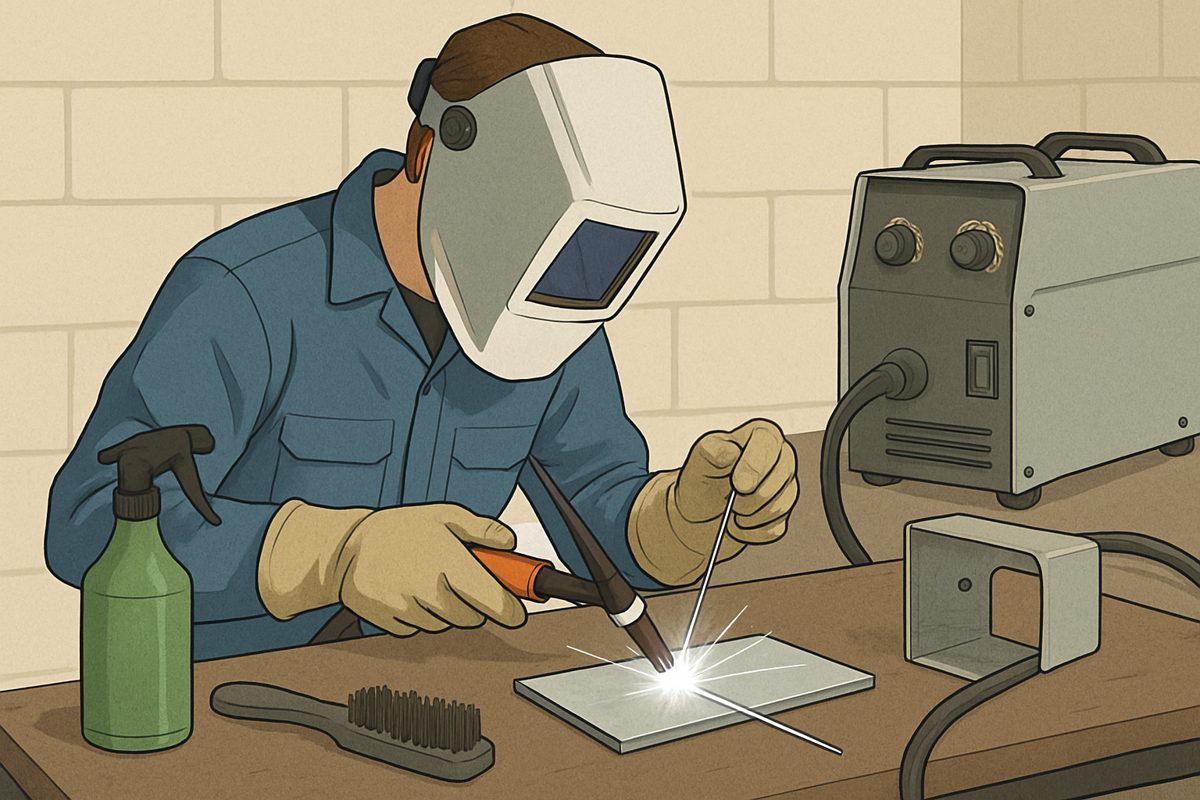
Porosity. Usually contamination or thin gas coverage. Check flow, hoses, and the nozzle, and clean the joint.
Lack of fusion. Too little heat or too fast. Slow your travel, add heat, and clean the edges.
Undercut. Often too much current or too long an arc. Shorten the arc or drop the amperage.
Burn-through. Lower the amperage, tack more often, add a backing bar, and stitch weld.
Low-hydrogen electrodes, preheat where needed, and joint designs with less restraint.
The puddle is stacking up. Lower the wire feed or raise the voltage, then test on scrap.
The fault finder is the bench version. The book covers the whole small shop: power, ventilation, and layout, a full chapter each on MIG, TIG, and stick, how steel, stainless, and aluminum behave, starting settings by material thickness, and beginner projects from a tool stand to a simple stool.
Read it on Amazon →Power, gear, wire and gas, a starting settings chart, and the hand habits behind a clean bead.
Check the gas, get the flow right, clean the metal, and repair a porous weld.
The settings that cause it, the fix on the next pass, and when to blend or reweld.
Read the bead: five defects, their causes, quick checks, and the grind-or-accept test.
Grab the free one-page fault finder, print it, and keep it next to the welder.
Send me the checklist →